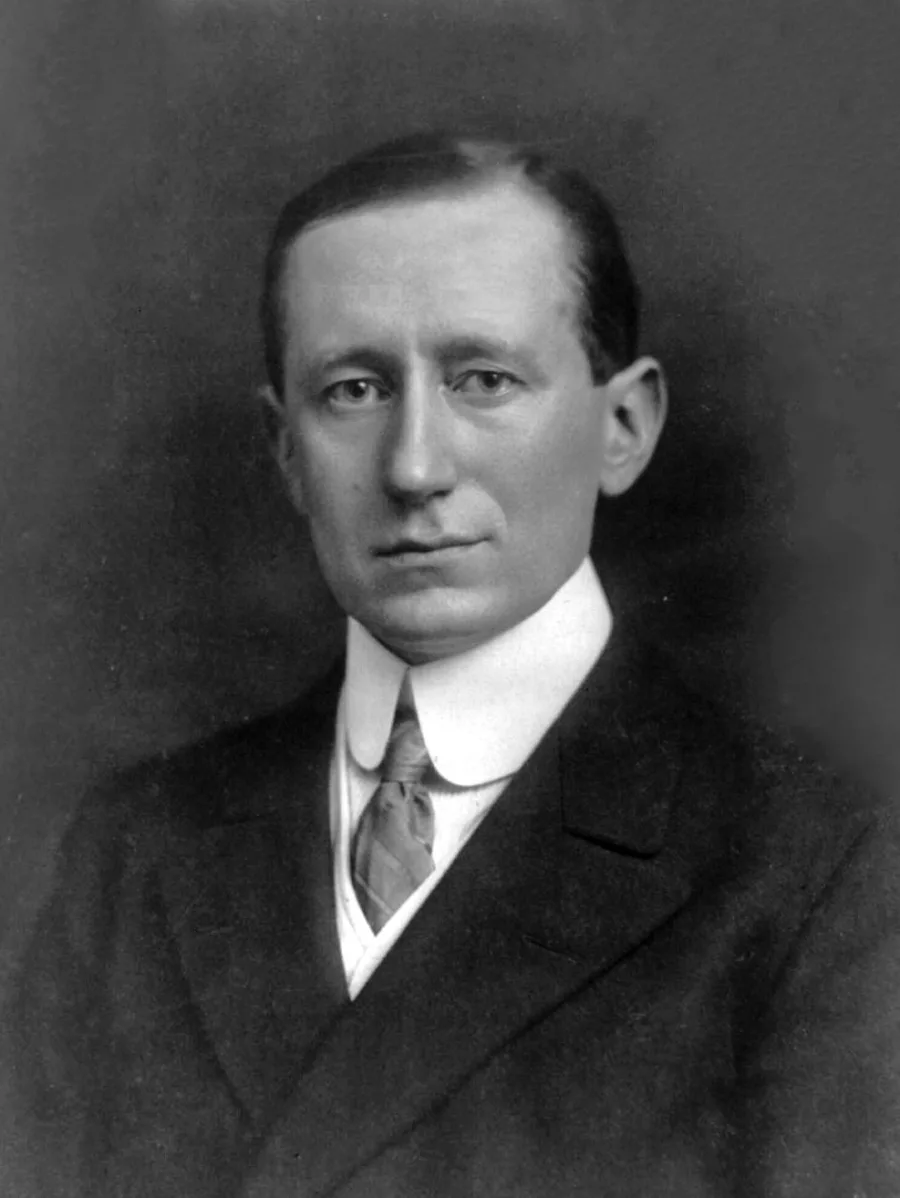
Guglielmo Marconi
Italian inventor who pioneered long-distance radio and won the Nobel Prize
- Lived
- 63 yrs
- 1874 – 1937
- Works listed
- 1
- Invention
- Honours
- 3
- Most recent 1920
- Profile views
- 0
- 0 followers
Guglielmo Marconi was an Italian inventor and businessman who developed practical radio communication. In 1901 his station sent the first radio signal across the Atlantic, and his wireless systems saved lives at sea. He shared the 1909 Nobel Prize in Physics with Karl Ferdinand Braun.
Biography
Early experiments
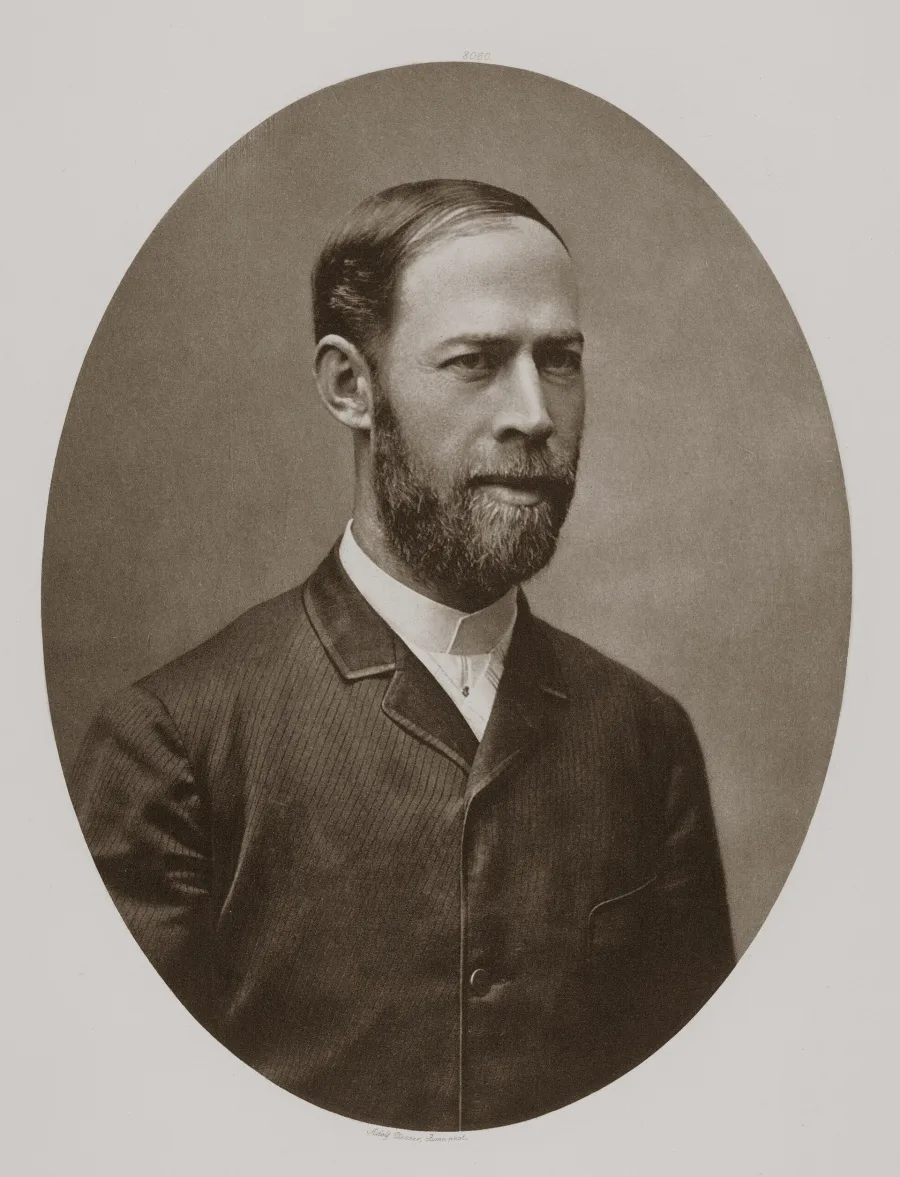
Marconi was born in Bologna to an Italian father and an Irish-Scottish mother. Inspired by Heinrich Hertz’s discovery of radio waves, he built transmitters at his family’s villa in 1895 and sent signals over increasing distances.
Britain and business
Finding little interest in Italy, he moved to England, patented his system in 1896 and founded the Wireless Telegraph & Signal Company, later the Marconi Company. He sent signals across the English Channel in 1899.
Across the Atlantic
On 12 December 1901 Marconi reported receiving the letter “S” in Morse code at St John’s, Newfoundland, sent from Poldhu in Cornwall. Ship-to-shore radio spread rapidly; Marconi operators on the Titanic in 1912 called for help, saving survivors.
Later life
He shared the 1909 Nobel Prize in Physics and continued work on shortwave and microwave radio. He became a senator and a supporter of Mussolini’s government. When he died in 1937, radio stations worldwide fell silent for two minutes.
Timeline
-
1874
Born in Bologna, Italy
-
1895
First radio experiments in Italy
-
1896
British patent for wireless telegraphy
-
1897
Founds his company
-
1899
Cross-Channel transmission
-
1901
Transatlantic signal
-
1909
Nobel Prize in Physics
-
1912
Wireless helps rescue Titanic survivors
-
1937
Dies in Rome
-
1937
Died, aged 63
Notable works
-
1896
Wireless telegraphy system Invention
Awards and honours
-
Matteucci Medal
1901
-
Nobel Prize in Physics
1909
-
IEEE Medal of Honor
1920
Did you know?
-
1
He was 27 when he sent the transatlantic signal.
-
2
He was offered free passage on the Titanic but had sailed three days earlier on the Lusitania.
-
3
Bologna’s airport is named after him.
Connections


Frequently asked
Who is Guglielmo Marconi?
Guglielmo Marconi was an Italian inventor and businessman who developed practical radio communication. In 1901 his station sent the first radio signal across the Atlantic, and his wireless systems saved lives at sea. He shared the 1909 Nobel Prize in Physics with Karl Ferdinand Braun.
When did Guglielmo Marconi die?
Guglielmo Marconi died on 20 July 1937 at the age of 63.
Where is Guglielmo Marconi from?
Guglielmo Marconi was born in Bologna, Italy.
What is Guglielmo Marconi known for?
Guglielmo Marconi is best known for Radio telegraphy; first transatlantic radio signal (1901); Nobel Prize in Physics 1909.
What awards has Guglielmo Marconi received?
Notable honours include Matteucci Medal (1901), Nobel Prize in Physics (1909), IEEE Medal of Honor (1920).
References
- Guglielmo Marconi — Wikipedia. Wikipedia. Retrieved 4 November 2026.
- Guglielmo Marconi — Britannica. Encyclopaedia Britannica. Retrieved 4 November 2026.
- Guglielmo Marconi — Nobel Prize facts. NobelPrize.org. Retrieved 4 November 2026.
- Guglielmo Marconi — Hindi Wikipedia. Wikipedia (Hindi). Retrieved 4 November 2026.
- Guglielmo Marconi (Q36488) — structured data. Wikidata. Retrieved 4 November 2026.
Includes material from the Wikipedia article “Guglielmo Marconi”, licensed under CC BY-SA 4.0. That text is available under the same licence. Learn more
External links
About this profile
- Researched by the TrackFame editorial team; reviewed by Sanjay Sokal under our editorial policy
- First published 4 November 2026
- Last updated
Cite this page
“Guglielmo Marconi.” TrackFame, last updated 4 November 2026. https://trackfame.com/person/guglielmo-marconi
Discussion 0
Sign in or create an account to join the discussion.
No comments yet — be the first.
More in Science
 Science
M. Visvesvaraya
Engineer and statesman, whose birthday is India’s Engineers’ Day
1860 – 1962
 Science
Frank Rosenblatt
Psychologist who invented the perceptron, an early learning neural network
1928 – 1971
 Science
Konrad Zuse
German engineer who built the first working programmable computer
1910 – 1995
 Science
Alan Turing
Mathematician who founded computer science and helped break the Enigma code
1912 – 1954
 Science
John von Neumann
Hungarian-American mathematician who defined the architecture of modern computers
1903 – 1957
 Science
John Atanasoff
Physicist who built the first electronic digital computing device
1903 – 1995