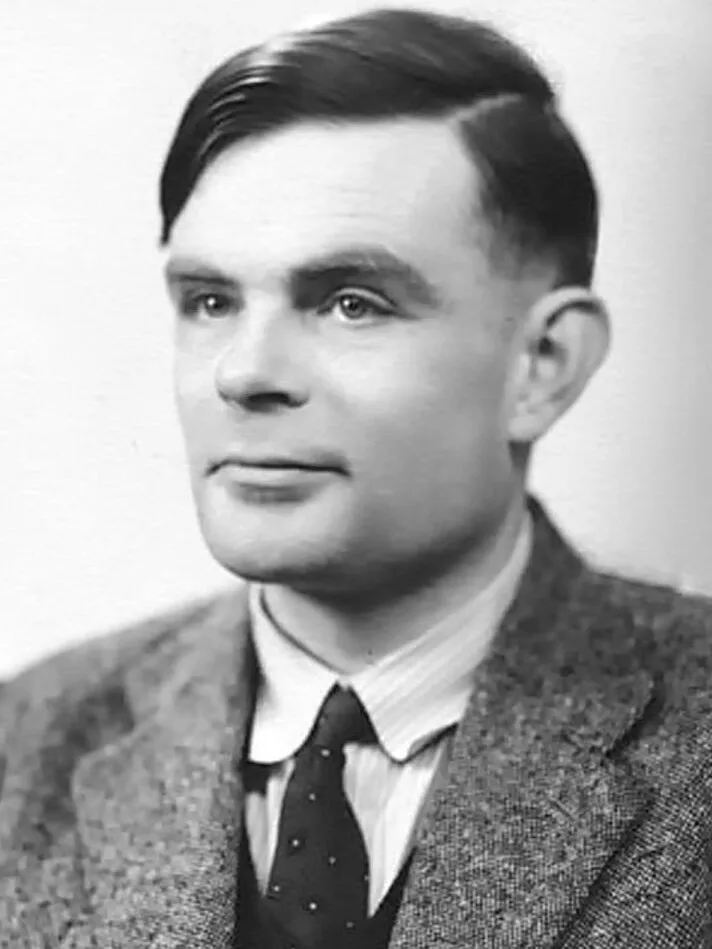
Alan Turing
Mathematician who founded computer science and helped break the Enigma code
- Lived
- 41 yrs
- 1912 – 1954
- Works listed
- 3
- Paper
- Honours
- 2
- Most recent 1951
- Profile views
- 5
- 0 followers
Alan Turing was an English mathematician whose 1936 concept of the Turing machine laid the theoretical foundation of computer science. During the Second World War he led work at Bletchley Park to break German Enigma codes, and he later proposed the Turing test for machine intelligence. He was prosecuted for homosexuality and died in 1954.
Biography
Early life
Turing showed great mathematical talent at Sherborne School and studied mathematics at King’s College, Cambridge, where he was elected a fellow at 22.
The Turing machine
In his 1936 paper “On Computable Numbers”, Turing described an imaginary machine that reads and writes symbols on a tape according to rules. He showed that one “universal” machine could carry out any computation, and that some problems cannot be solved by any machine. This is the theoretical model of every computer. He then earned a PhD at Princeton under Alonzo Church.
Bletchley Park
From 1939 Turing worked at the Government Code and Cypher School at Bletchley Park. He designed the Bombe, an electromechanical machine that found the daily Enigma settings, and led Hut 8, which broke German naval codes. This work helped win the Battle of the Atlantic; he was appointed OBE in 1946.
Computers, AI and tragedy
After the war he designed the ACE computer at the National Physical Laboratory and worked on the Manchester computers. His 1950 paper “Computing Machinery and Intelligence” proposed the imitation game, now called the Turing test. In 1952 he was convicted of “gross indecency” for a relationship with a man and chemically castrated. He died of cyanide poisoning in 1954. The UK government apologised in 2009, he received a royal pardon in 2013, and he appears on the Bank of England £50 note.
Timeline
-
1912
Born in Maida Vale, London, England
-
1936
On Computable Numbers
-
1938
PhD from Princeton
-
1939
Joins Bletchley Park
-
1940
First Bombe in operation
-
1946
ACE design; appointed OBE
-
1950
Computing Machinery and Intelligence
-
1952
Prosecuted for homosexuality
-
1954
Dies at Wilmslow
-
2013
Royal pardon
-
1954
Died, aged 41
Notable works
-
1936
On Computable Numbers, with an Application to the Entscheidungsproblem Paper
-
1950
Computing Machinery and Intelligence Paper
-
1952
The Chemical Basis of Morphogenesis Paper
Awards and honours
-
Officer of the Order of the British Empire
1946
-
Fellow of the Royal Society
1951
Did you know?
-
1
The Turing Award, computing’s highest honour, is named after him.
-
2
He was an excellent long-distance runner, close to Olympic standard.
-
3
The 2014 film The Imitation Game dramatised his wartime work.
-
4
“Turing’s law” in 2017 pardoned thousands of other men convicted under the same laws.
Connections

Frequently asked
Who is Alan Turing?
Alan Turing was an English mathematician whose 1936 concept of the Turing machine laid the theoretical foundation of computer science. During the Second World War he led work at Bletchley Park to break German Enigma codes, and he later proposed the Turing test for machine intelligence. He was prosecuted for homosexuality and died in 1954.
When did Alan Turing die?
Alan Turing died on 7 June 1954 at the age of 41.
Where is Alan Turing from?
Alan Turing was born in Maida Vale, London, England.
What is Alan Turing known for?
Alan Turing is best known for The Turing machine; codebreaking at Bletchley Park; the Turing test; artificial intelligence.
What awards has Alan Turing received?
Notable honours include Officer of the Order of the British Empire (1946), Fellow of the Royal Society (1951).
References
- Alan Turing — Wikipedia. Wikipedia. Retrieved 4 November 2026.
- Alan Turing — Britannica. Encyclopaedia Britannica. Retrieved 4 November 2026.
- Alan Turing — IMDb. IMDb. Retrieved 4 November 2026.
- Alan Turing — Hindi Wikipedia. Wikipedia (Hindi). Retrieved 4 November 2026.
- Official website. www.turingarchive.org. Retrieved 4 November 2026.
- Alan Turing (Q7251) — structured data. Wikidata. Retrieved 4 November 2026.
Includes material from the Wikipedia article “Alan Turing”, licensed under CC BY-SA 4.0. That text is available under the same licence. Learn more
External links
About this profile
- Researched by the TrackFame editorial team; reviewed by Sanjay Sokal under our editorial policy
- First published 4 November 2026
- Last updated
Cite this page
“Alan Turing.” TrackFame, last updated 5 November 2026. https://trackfame.com/person/alan-turing
Discussion 0
Sign in or create an account to join the discussion.
No comments yet — be the first.
More in Science
 Science
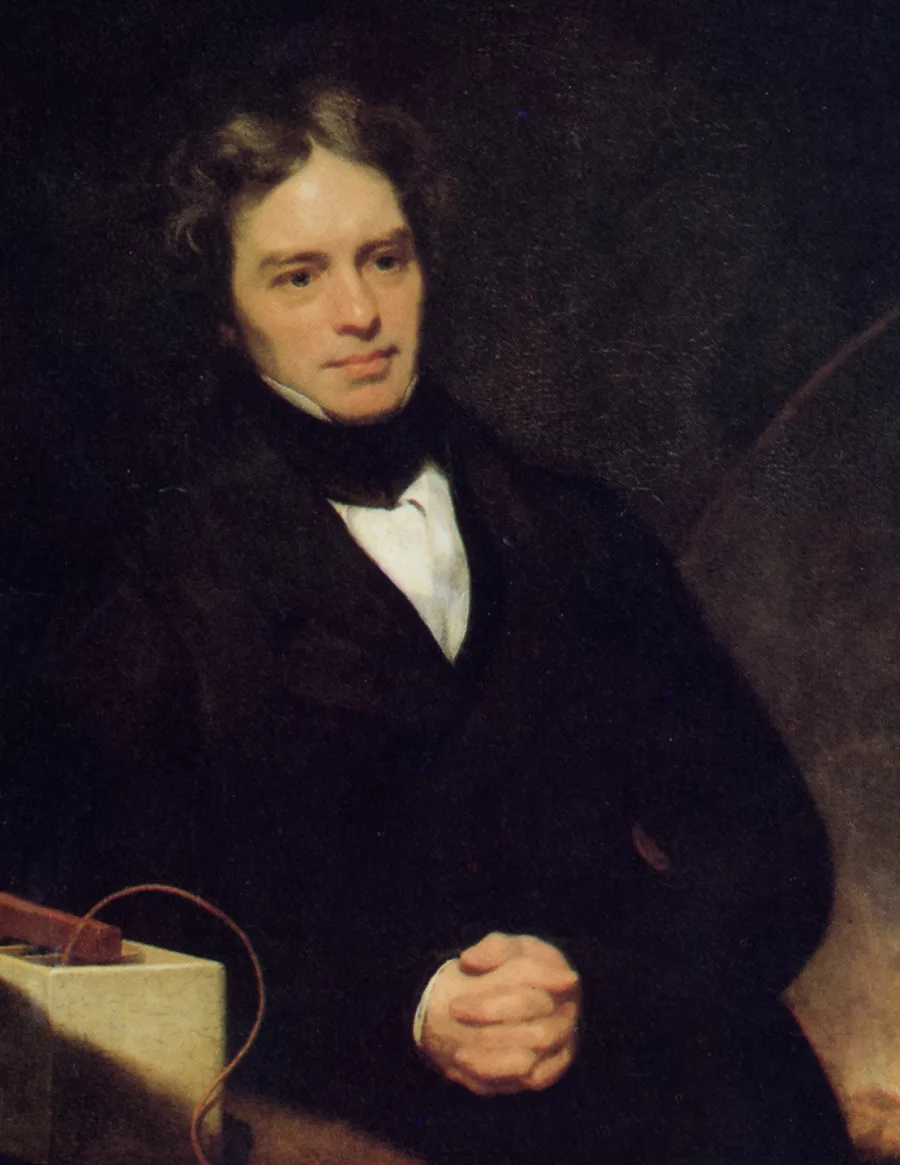
Michael Faraday
Self-taught scientist who discovered electromagnetic induction
1791 – 1867
 Science
Nikola Tesla
Serbian-American inventor of the alternating-current induction motor
1856 – 1943
 Science
M. Visvesvaraya
Engineer and statesman, whose birthday is India’s Engineers’ Day
1860 – 1962
 Science
Konrad Zuse
German engineer who built the first working programmable computer
1910 – 1995
 Science
John Mauchly
Physicist who conceived ENIAC and co-founded the first computer company
1907 – 1980
 Science
Charles Babbage
Victorian mathematician who designed the first programmable mechanical computer
1791 – 1871