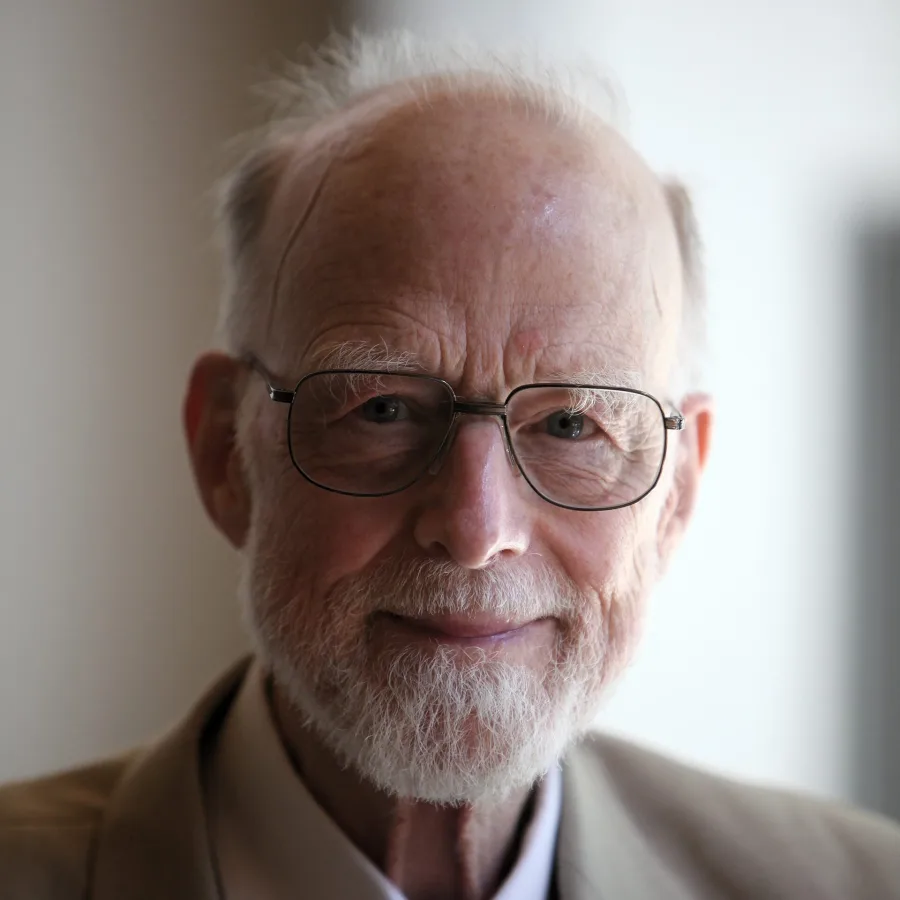
Tony Hoare
British computer scientist who invented Quicksort and Hoare logic
- Lived
- 92 yrs
- 1934 – 2026
- Works listed
- 3
- Algorithm, Paper
- Honours
- 4
- Most recent 2000
- Profile views
- 4
- 0 followers
Sir Tony Hoare was a British computer scientist who invented Quicksort, one of the most widely used sorting algorithms, and Hoare logic for proving programs correct. He also created Communicating Sequential Processes (CSP) for concurrent programs and received the Turing Award in 1980.
Biography
Early life
Hoare was born in Colombo to British parents and studied classics and philosophy at Merton College, Oxford. During national service he learned Russian, and in 1959 he studied machine translation at Moscow State University.
Quicksort
In Moscow, while working on sorting words for a translation program, he devised Quicksort, published in 1961. It sorts by repeatedly splitting a list around a pivot and remains one of the fastest general-purpose sorting methods.
Making programs trustworthy
After working at Elliott Brothers, where he led an ALGOL 60 compiler project, he became a professor at Queen’s University Belfast and then Oxford. His 1969 paper introduced Hoare logic for reasoning about program correctness, and his 1978 CSP model shaped concurrent programming languages such as occam and Go.
The billion-dollar mistake
Hoare introduced the null reference in ALGOL W in 1965 and later called it his “billion-dollar mistake”. He was knighted in 2000 and worked at Microsoft Research in Cambridge. He died on 5 March 2026, aged 92.
Timeline
-
1934
Born in Colombo, British Ceylon (now Sri Lanka)
-
1959
Invents Quicksort in Moscow
-
1961
Quicksort published
-
1968
Professor at Queen’s University Belfast
-
1969
Hoare logic paper
-
1977
Professor at Oxford
-
1978
CSP paper
-
1980
Turing Award
-
2000
Knighted; Kyoto Prize
-
2026
Died, aged 92
Notable works
-
1961
Quicksort Algorithm
-
1969
An Axiomatic Basis for Computer Programming Paper
-
1985
Communicating Sequential Processes Book
Awards and honours
-
Turing Award
1980
-
Fellow of the Royal Society
1982
-
Kyoto Prize
2000
-
Knight Bachelor
2000
Did you know?
-
1
He first studied Latin, Greek and philosophy, not science.
-
2
He called null references his “billion-dollar mistake” in a 2009 talk.
-
3
The Go language’s channels draw on his CSP ideas.
Connections
Related people
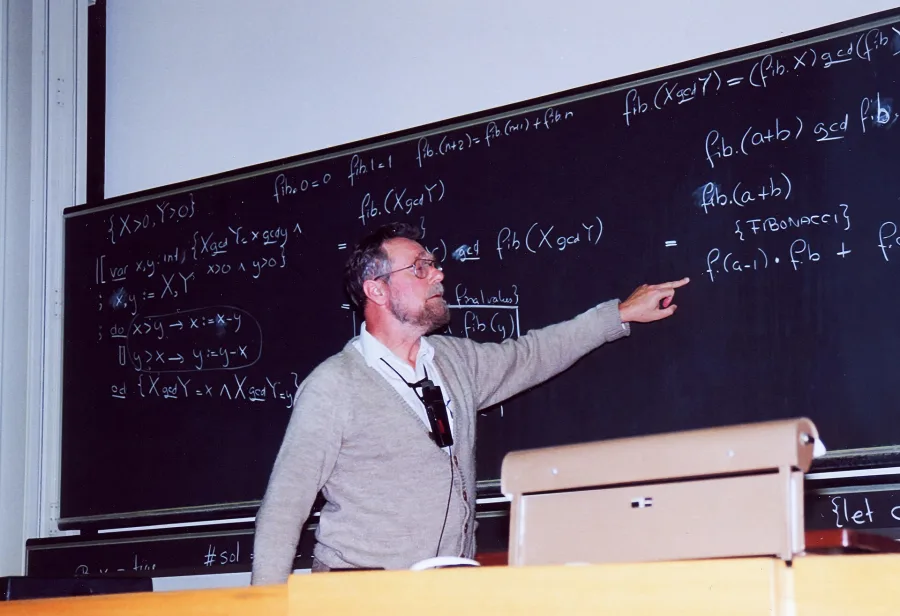
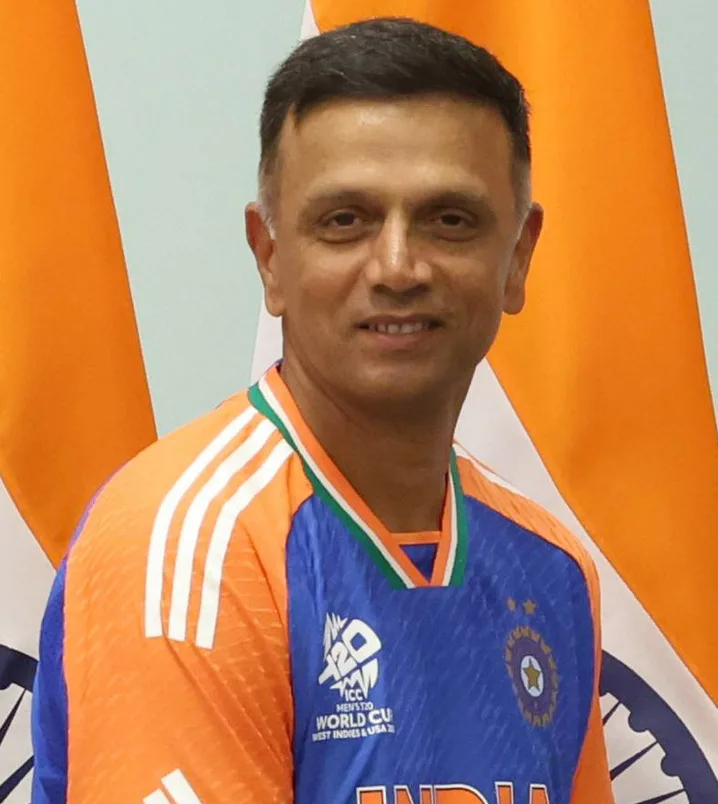
Also born on 11 January


Frequently asked
Who is Tony Hoare?
Sir Tony Hoare was a British computer scientist who invented Quicksort, one of the most widely used sorting algorithms, and Hoare logic for proving programs correct. He also created Communicating Sequential Processes (CSP) for concurrent programs and received the Turing Award in 1980.
When did Tony Hoare die?
Tony Hoare died on 5 March 2026 at the age of 92.
Where is Tony Hoare from?
Tony Hoare was born in Colombo, British Ceylon (now Sri Lanka).
What is Tony Hoare known for?
Tony Hoare is best known for Quicksort; Hoare logic; Communicating Sequential Processes; Turing Award 1980.
What awards has Tony Hoare received?
Notable honours include Turing Award (1980), Fellow of the Royal Society (1982), Kyoto Prize (2000), Knight Bachelor (2000).
References
- Tony Hoare — Wikipedia. Wikipedia. Retrieved 4 November 2026.
- Tony Hoare — Britannica. Encyclopaedia Britannica. Retrieved 4 November 2026.
- Official website. www.cs.ox.ac.uk. Retrieved 4 November 2026.
- Tony Hoare (Q92602) — structured data. Wikidata. Retrieved 4 November 2026.
Includes material from the Wikipedia article “Tony Hoare”, licensed under CC BY-SA 4.0. That text is available under the same licence. Learn more
External links
About this profile
- Researched by the TrackFame editorial team; reviewed by Sanjay Sokal under our editorial policy
- First published 4 November 2026
- Last updated
Cite this page
“Tony Hoare.” TrackFame, last updated 5 November 2026. https://trackfame.com/person/tony-hoare
Discussion 0
Sign in or create an account to join the discussion.
No comments yet — be the first.
More in Science
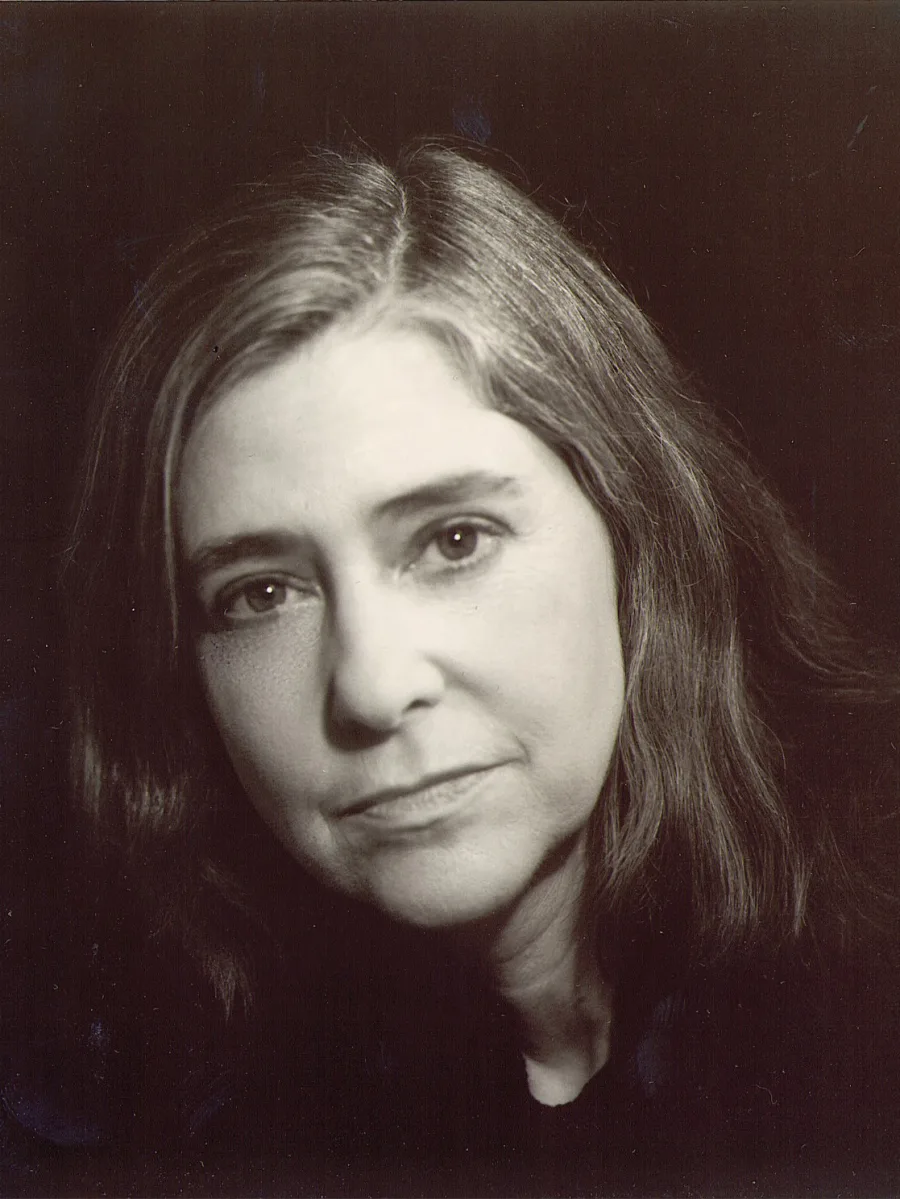 Science
Margaret Hamilton
MIT engineer who led the software for the Apollo Moon landings and coined “software engineering”
1936 – 2026
 Science
Marvin Minsky
Co-founder of MIT’s artificial intelligence laboratory and a founding father of AI
1927 – 2016
 Science
Michael Faraday
Self-taught scientist who discovered electromagnetic induction
1791 – 1867
 Science
Nikola Tesla
Serbian-American inventor of the alternating-current induction motor
1856 – 1943
 Science
Yann LeCun
French-American AI pioneer who invented convolutional neural networks
Born 1959
 Science
Peter Norvig
Google’s former director of research and co-author of the leading AI textbook
Born 1956