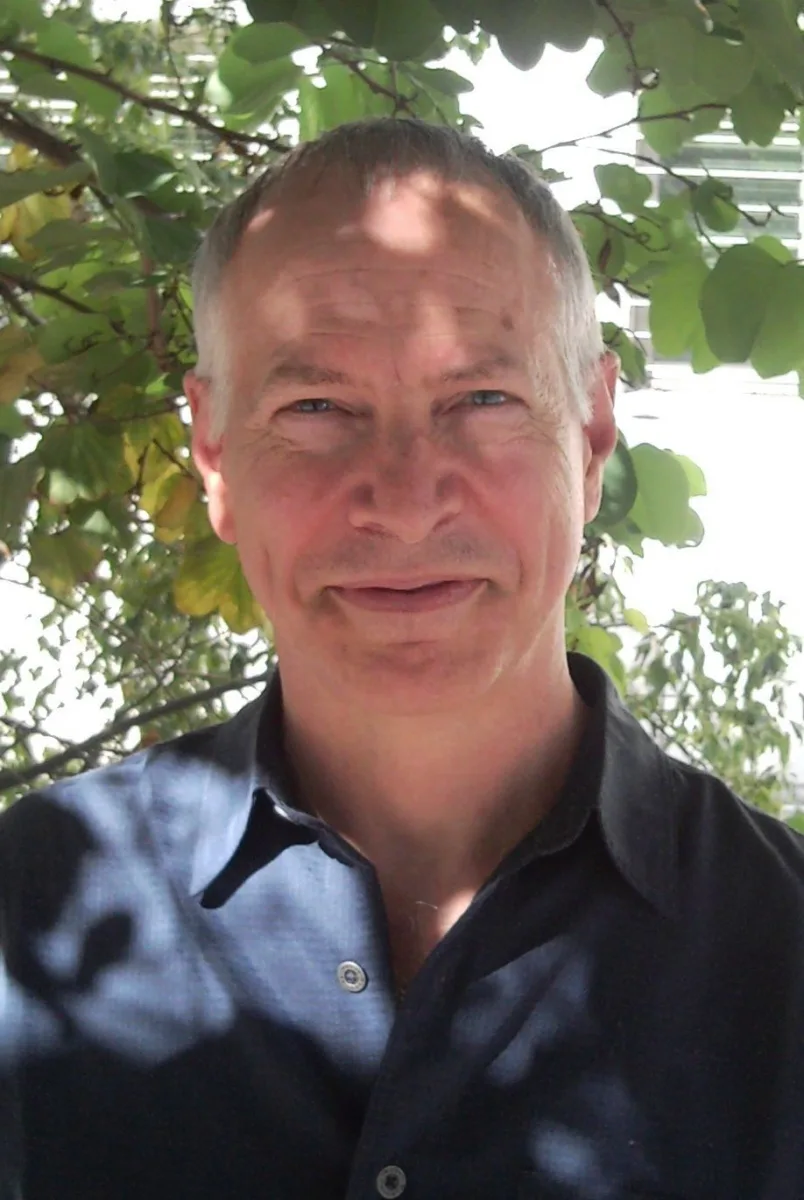
Robert Tarjan
Computer scientist who designed many of the fundamental graph algorithms and data structures
- Age
- 78 yrs
- Birthday in 175 days
- Works listed
- 2
- Paper
- Honours
- 3
- Most recent 1999
- Profile views
- 3
- 0 followers
Robert Tarjan is an American computer scientist known for elegant algorithms and data structures, including Tarjan’s strongly connected components algorithm, splay trees and Fibonacci heaps. He shared the 1986 Turing Award with John Hopcroft and is a professor at Princeton.
Biography
Education
Tarjan studied mathematics at Caltech and earned his PhD at Stanford in 1972 under Robert Floyd and Donald Knuth.
Graph algorithms
Using depth-first search, Tarjan found fast algorithms for problems such as finding strongly connected components and testing planarity. These run in time proportional to the size of the graph and are taught in algorithms courses worldwide.
Data structures
With Daniel Sleator he invented splay trees and link-cut trees, and with Michael Fredman the Fibonacci heap, which speeds up Dijkstra’s algorithm. He also analysed the union–find data structure, showing a surprising link to the inverse Ackermann function.
Industry and academia
Tarjan has been a professor at Princeton since 1985 and has worked for companies including NEC, InterTrust, Hewlett-Packard and Microsoft. He received the first Nevanlinna Prize in 1982.
Timeline
-
1948
Born in Pomona, California, United States
-
1972
PhD from Stanford
-
1972
Strongly connected components algorithm
-
1982
First Nevanlinna Prize
-
1984
Fibonacci heaps with Michael Fredman
-
1985
Splay trees published; joins Princeton
-
1986
Turing Award
Notable works
-
1972
Depth-First Search and Linear Graph Algorithms Paper
-
1985
Self-Adjusting Binary Search Trees Paper
With Daniel Sleator.
Awards and honours
-
Nevanlinna Prize
1982
-
Turing Award
1986
-
Paris Kanellakis Award
1999
Did you know?
-
1
The Nevanlinna Prize is now called the IMU Abacus Medal.
-
2
Several algorithms bear his name.
-
3
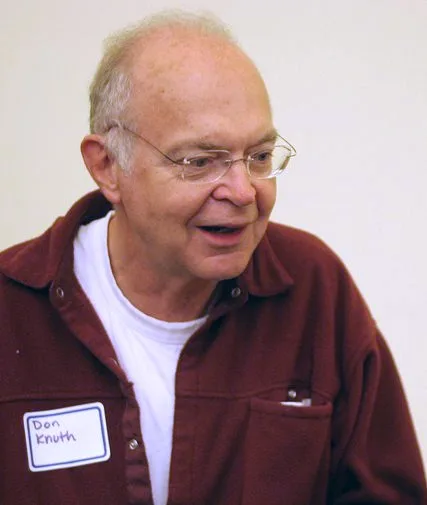
He was a student of both Robert Floyd and Donald Knuth.
Connections
Related people

Frequently asked
Who is Robert Tarjan?
Robert Tarjan is an American computer scientist known for elegant algorithms and data structures, including Tarjan’s strongly connected components algorithm, splay trees and Fibonacci heaps. He shared the 1986 Turing Award with John Hopcroft and is a professor at Princeton.
How old is Robert Tarjan?
Robert Tarjan is 78 years old, born on 30 April 1948 in Pomona, California, United States.
Where is Robert Tarjan from?
Robert Tarjan was born in Pomona, California, United States.
What is Robert Tarjan known for?
Robert Tarjan is best known for Graph algorithms; splay trees; Fibonacci heaps; union–find analysis; Turing Award 1986.
What awards has Robert Tarjan received?
Notable honours include Nevanlinna Prize (1982), Turing Award (1986), Paris Kanellakis Award (1999).
References
- Robert Tarjan — Wikipedia. Wikipedia. Retrieved 4 November 2026.
- Robert Tarjan — Britannica. Encyclopaedia Britannica. Retrieved 4 November 2026.
- Robert Tarjan (Q92638) — structured data. Wikidata. Retrieved 4 November 2026.
Includes material from the Wikipedia article “Robert Tarjan”, licensed under CC BY-SA 4.0. That text is available under the same licence. Learn more
External links
About this profile
- Researched by the TrackFame editorial team; reviewed by Sanjay Sokal under our editorial policy
- First published 4 November 2026
- Last updated
Cite this page
“Robert Tarjan.” TrackFame, last updated 5 November 2026. https://trackfame.com/person/robert-tarjan
Discussion 0
Sign in or create an account to join the discussion.
No comments yet — be the first.
More in Science
 Science
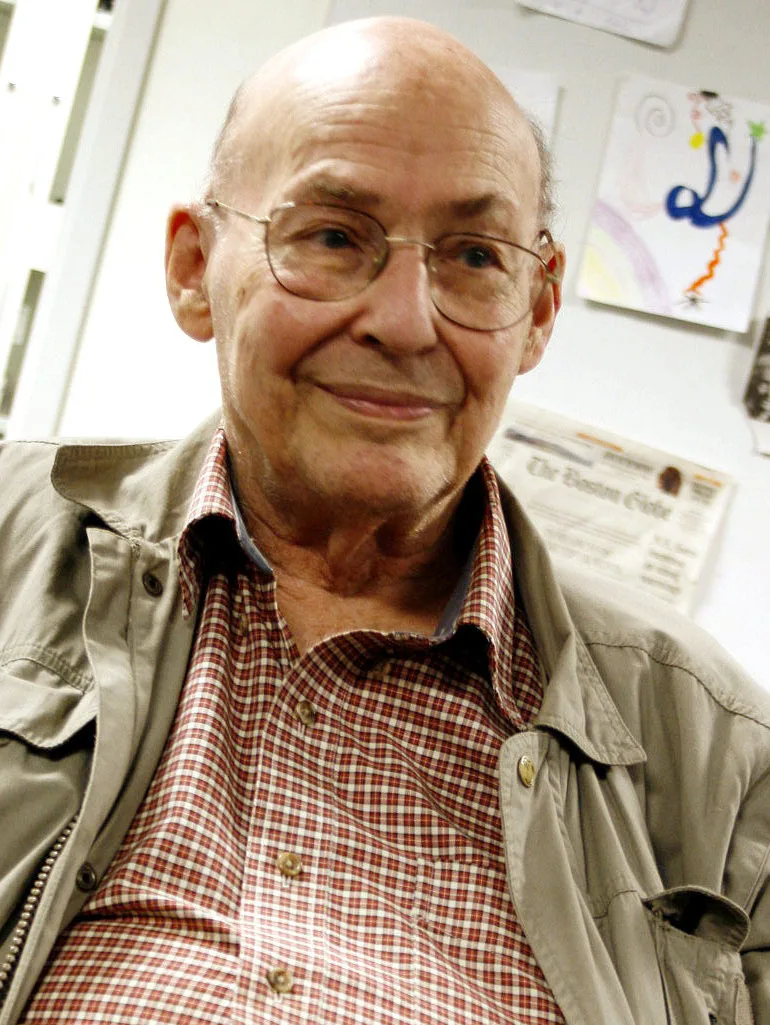
Marvin Minsky
Co-founder of MIT’s artificial intelligence laboratory and a founding father of AI
1927 – 2016
 Science
Yann LeCun
French-American AI pioneer who invented convolutional neural networks
Born 1959
 Science
Nikola Tesla
Serbian-American inventor of the alternating-current induction motor
1856 – 1943
 Science
Margaret Hamilton
MIT engineer who led the software for the Apollo Moon landings and coined “software engineering”
1936 – 2026
 Science
Peter Naur
Danish computer scientist who edited the ALGOL 60 report and refined Backus–Naur form
1928 – 2016
 Science
Michael Faraday
Self-taught scientist who discovered electromagnetic induction
1791 – 1867