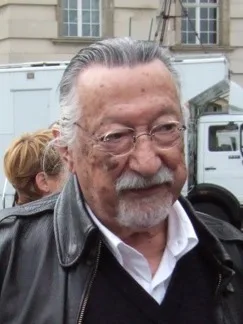
Joseph Weizenbaum
MIT computer scientist who created ELIZA and became a critic of AI
- Lived
- 85 yrs
- 1923 – 2008
- Works listed
- 2
- Chatbot, Book
- Honours
- 1
- Most recent 1988
- Profile views
- 0
- 0 followers
Joseph Weizenbaum was a German-American computer scientist at MIT who created ELIZA in 1966, one of the first chatbots, which imitated a psychotherapist. Alarmed at how readily people confided in it, he became a leading critic of over-reliance on computers.
Biography
Background
Weizenbaum’s Jewish family fled Nazi Germany in 1936. He studied mathematics at Wayne State University and worked on early computers, including General Electric’s ERMA banking system.
ELIZA
At MIT in 1966 he wrote ELIZA, a program that matched keywords to produce responses. Its “DOCTOR” script played a therapist reflecting questions back. Users, including his secretary, treated it as understanding them.
Critic
In Computer Power and Human Reason (1976) he argued that some decisions should never be delegated to computers and warned against treating people as machines.
Later life
He returned to Berlin in 1996 and died in 2008. The Weizenbaum Institute for the Networked Society in Berlin is named after him.
Timeline
-
1923
Born in Berlin, Germany
-
1936
Family flees Germany
-
1955
Works on ERMA at GE
-
1963
Joins MIT
-
1966
ELIZA
-
1976
Computer Power and Human Reason
-
1996
Returns to Berlin
-
2008
Dies
-
2008
Died, aged 85
Notable works
-
1966
ELIZA Chatbot
-
1976
Computer Power and Human Reason Book
Awards and honours
-
Norbert Wiener Award
1988
Did you know?
-
1
The “ELIZA effect” describes people attributing understanding to computers.
-
2
ELIZA was named after Eliza Doolittle in Pygmalion.
-
3
His secretary asked him to leave the room so she could talk to ELIZA privately.
Connections
Frequently asked
Who is Joseph Weizenbaum?
Joseph Weizenbaum was a German-American computer scientist at MIT who created ELIZA in 1966, one of the first chatbots, which imitated a psychotherapist. Alarmed at how readily people confided in it, he became a leading critic of over-reliance on computers.
When did Joseph Weizenbaum die?
Joseph Weizenbaum died on 5 March 2008 at the age of 85.
Where is Joseph Weizenbaum from?
Joseph Weizenbaum was born in Berlin, Germany.
What is Joseph Weizenbaum known for?
Joseph Weizenbaum is best known for ELIZA chatbot (1966); Computer Power and Human Reason (1976).
What awards has Joseph Weizenbaum received?
Notable honours include Norbert Wiener Award (1988).
References
- Joseph Weizenbaum — Wikipedia. Wikipedia. Retrieved 4 November 2026.
- Joseph Weizenbaum — Britannica. Encyclopaedia Britannica. Retrieved 4 November 2026.
- Joseph Weizenbaum — IMDb. IMDb. Retrieved 4 November 2026.
- Joseph Weizenbaum (Q75778) — structured data. Wikidata. Retrieved 4 November 2026.
Includes material from the Wikipedia article “Joseph Weizenbaum”, licensed under CC BY-SA 4.0. That text is available under the same licence. Learn more
External links
About this profile
- Researched by the TrackFame editorial team; reviewed by Sanjay Sokal under our editorial policy
- First published 4 November 2026
- Last updated
Cite this page
“Joseph Weizenbaum.” TrackFame, last updated 4 November 2026. https://trackfame.com/person/joseph-weizenbaum
Discussion 0
Sign in or create an account to join the discussion.
No comments yet — be the first.
More in Science
 Science
William Shockley
Nobel-winning co-inventor of the transistor who brought silicon to Silicon Valley
1910 – 1989
 Science
M. Visvesvaraya
Engineer and statesman, whose birthday is India’s Engineers’ Day
1860 – 1962
 Science
Amnon Shashua
Israeli computer scientist who co-founded Mobileye
Born 1960
Ashish Vaswani
Lead author of the transformer paper “Attention Is All You Need”
 Science
David Patterson
Berkeley professor who coined RISC and co-created RAID
Born 1947
 Science
Charles K. Kao
“Godfather of broadband” who showed glass fibres could carry light over long distances
1933 – 2018