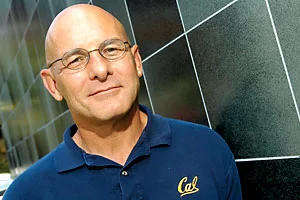
David Patterson
Berkeley professor who coined RISC and co-created RAID
- Age
- 78 yrs
- Birthday in 11 days
- Works listed
- 2
- Paper, Book
- Honours
- 4
- Most recent 2022
- Profile views
- 0
- 0 followers
David Patterson is an American computer scientist who led Berkeley’s RISC project, coining the term “reduced instruction set computer”, and co-invented RAID disk storage. He co-wrote the classic architecture textbooks with John Hennessy and shared the 2017 Turing Award. He later helped launch the open RISC-V instruction set.
Biography
Education
Patterson was the first in his family to go to college, studying mathematics at UCLA, where he also earned his PhD in 1976. He joined the University of California, Berkeley, that year.
RISC
From 1980 his Berkeley RISC project designed simple, fast processors. RISC-I and RISC-II influenced Sun’s SPARC architecture and, alongside Stanford’s MIPS, changed how chips were designed.
RAID and networks of workstations
In 1987, with Randy Katz and Garth Gibson, he proposed RAID — combining cheap disks to achieve speed and reliability. RAID is now standard in servers and data centres.
RISC-V and Google
In 2010 his Berkeley group created RISC-V, an open, royalty-free instruction set now used by many companies worldwide. After retiring from Berkeley in 2016 he joined Google, working on its Tensor Processing Unit AI chips. He shared the 2017 Turing Award with Hennessy.
Timeline
-
1947
Born in Evergreen Park, Illinois, United States
-
1976
PhD from UCLA; joins Berkeley
-
1980
Berkeley RISC project
-
1987
RAID paper
-
1990
Quantitative Approach textbook
-
2010
RISC-V begins
-
2016
Joins Google
-
2017
Turing Award with Hennessy
Notable works
-
1988
A Case for Redundant Arrays of Inexpensive Disks (RAID) Paper
With Garth Gibson and Randy Katz.
-
1994
Computer Organization and Design Book
With John Hennessy.
Awards and honours
-
IEEE John von Neumann Medal
2000
-
Eckert–Mauchly Award
2008
-
Turing Award
2017
-
Charles Stark Draper Prize
2022
Did you know?
-
1
He has competed in powerlifting and set state records.
-
2
He was president of the ACM from 2004 to 2006.
-
3
RISC-V chips are used in products from microcontrollers to AI accelerators.
Connections
Also born on 16 November
Frequently asked
Who is David Patterson?
David Patterson is an American computer scientist who led Berkeley’s RISC project, coining the term “reduced instruction set computer”, and co-invented RAID disk storage. He co-wrote the classic architecture textbooks with John Hennessy and shared the 2017 Turing Award. He later helped launch the open RISC-V instruction set.
How old is David Patterson?
David Patterson is 78 years old, born on 16 November 1947 in Evergreen Park, Illinois, United States.
Where is David Patterson from?
David Patterson was born in Evergreen Park, Illinois, United States.
What is David Patterson known for?
David Patterson is best known for RISC processors; RAID storage; RISC-V; architecture textbooks; Turing Award 2017.
What awards has David Patterson received?
Notable honours include IEEE John von Neumann Medal (2000), Eckert–Mauchly Award (2008), Turing Award (2017), Charles Stark Draper Prize (2022).
References
- David Patterson (computer scientist) — Wikipedia. Wikipedia. Retrieved 4 November 2026.
- Official website. www2.eecs.berkeley.edu. Retrieved 4 November 2026.
- David Patterson (computer scientist) (Q92851) — structured data. Wikidata. Retrieved 4 November 2026.
Includes material from the Wikipedia article “David Patterson (computer scientist)”, licensed under CC BY-SA 4.0. That text is available under the same licence. Learn more
External links
About this profile
- Researched by the TrackFame editorial team; reviewed by Sanjay Sokal under our editorial policy
- First published 4 November 2026
- Last updated
Cite this page
“David Patterson.” TrackFame, last updated 4 November 2026. https://trackfame.com/person/david-patterson
Discussion 0
Sign in or create an account to join the discussion.
No comments yet — be the first.
More in Science
Ashok Jhunjhunwala
IIT Madras professor and telecom innovator
Born 1953
 Science
William Shockley
Nobel-winning co-inventor of the transistor who brought silicon to Silicon Valley
1910 – 1989
 Science
Yuri Milner
Investor behind DST Global and the Breakthrough Prizes
Born 1961
 Science
M. Visvesvaraya
Engineer and statesman, whose birthday is India’s Engineers’ Day
1860 – 1962
 Science
Amnon Shashua
Israeli computer scientist who co-founded Mobileye
Born 1960
 Science
Yann LeCun
French-American AI pioneer who invented convolutional neural networks
Born 1959