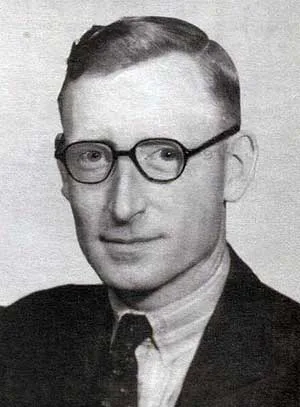
Tommy Flowers
Post Office engineer who built Colossus, the first programmable electronic computer
- Lived
- 92 yrs
- 1905 – 1998
- Works listed
- 1
- Computer
- Honours
- 2
- Most recent 1980
- Profile views
- 0
- 0 followers
Tommy Flowers was a British engineer at the Post Office Research Station who designed and built Colossus, the world’s first programmable electronic digital computer, used from 1944 to break German high-command codes at Bletchley Park. His work remained secret for decades.
Biography
Early life
Flowers was the son of a bricklayer in the East End of London. He served an apprenticeship at the Royal Arsenal, studied electrical engineering at evening classes and joined the Post Office telephone service in 1926, where he worked on electronic telephone exchanges.
Colossus
In 1943 codebreakers at Bletchley Park needed a faster machine to attack the Lorenz cipher used by Hitler’s high command. Flowers proposed a machine with about 1,600 vacuum tubes, which experts thought would be unreliable. He built it at Dollis Hill largely at his own expense, and Colossus began working in early 1944. An improved Mark 2 with 2,400 valves was ready just before D-Day.
Secret history
Ten Colossus machines were in use by the end of the war. Most were destroyed afterwards and Flowers was bound by the Official Secrets Act, so he could not take credit; his role became public only in the 1970s.
Later life
He continued at the Post Office, working on electronic exchanges. He was appointed MBE in 1943 and died in 1998.
Timeline
-
1905
Born in Poplar, London, England
-
1926
Joins the Post Office
-
1943
Begins designing Colossus
-
1944
Colossus Mark 1 working; Mark 2 ready by 1 June
-
1945
Ten Colossi in operation
-
1970
Colossus begins to be declassified
-
1998
Dies in London
-
1998
Died, aged 92
Notable works
-
1944
Colossus Computer
Awards and honours
-
Member of the Order of the British Empire
1943
-
Martlesham Medal
1980
Did you know?
-
1
He received £1,000 from the government for his work, less than he had spent of his own money.
-
2
A working rebuild of Colossus is at The National Museum of Computing.
-
3
BT named a research building after him.
Connections

Frequently asked
Who is Tommy Flowers?
Tommy Flowers was a British engineer at the Post Office Research Station who designed and built Colossus, the world’s first programmable electronic digital computer, used from 1944 to break German high-command codes at Bletchley Park. His work remained secret for decades.
When did Tommy Flowers die?
Tommy Flowers died on 28 October 1998 at the age of 92.
Where is Tommy Flowers from?
Tommy Flowers was born in Poplar, London, England.
What is Tommy Flowers known for?
Tommy Flowers is best known for Colossus code-breaking computer at Bletchley Park (1944).
What awards has Tommy Flowers received?
Notable honours include Member of the Order of the British Empire (1943), Martlesham Medal (1980).
References
- Tommy Flowers — Wikipedia. Wikipedia. Retrieved 4 November 2026.
- Tommy Flowers — Britannica. Encyclopaedia Britannica. Retrieved 4 November 2026.
- Tommy Flowers (Q954437) — structured data. Wikidata. Retrieved 4 November 2026.
Includes material from the Wikipedia article “Tommy Flowers”, licensed under CC BY-SA 4.0. That text is available under the same licence. Learn more
External links
About this profile
- Researched by the TrackFame editorial team; reviewed by Sanjay Sokal under our editorial policy
- First published 4 November 2026
- Last updated
Cite this page
“Tommy Flowers.” TrackFame, last updated 4 November 2026. https://trackfame.com/person/tommy-flowers
Discussion 0
Sign in or create an account to join the discussion.
No comments yet — be the first.
More in Technology
F. C. Kohli
First CEO of Tata Consultancy Services, father of India’s IT industry
1924 – 2020
 Science
Konrad Zuse
German engineer who built the first working programmable computer
1910 – 1995
 Science
Alan Turing
Mathematician who founded computer science and helped break the Enigma code
1912 – 1954
 Science
John Mauchly
Physicist who conceived ENIAC and co-founded the first computer company
1907 – 1980
 Technology
Thomas Edison
Prolific American inventor of the phonograph, practical light bulb and motion-picture camera
1847 – 1931
 Science
Michael Faraday
Self-taught scientist who discovered electromagnetic induction
1791 – 1867