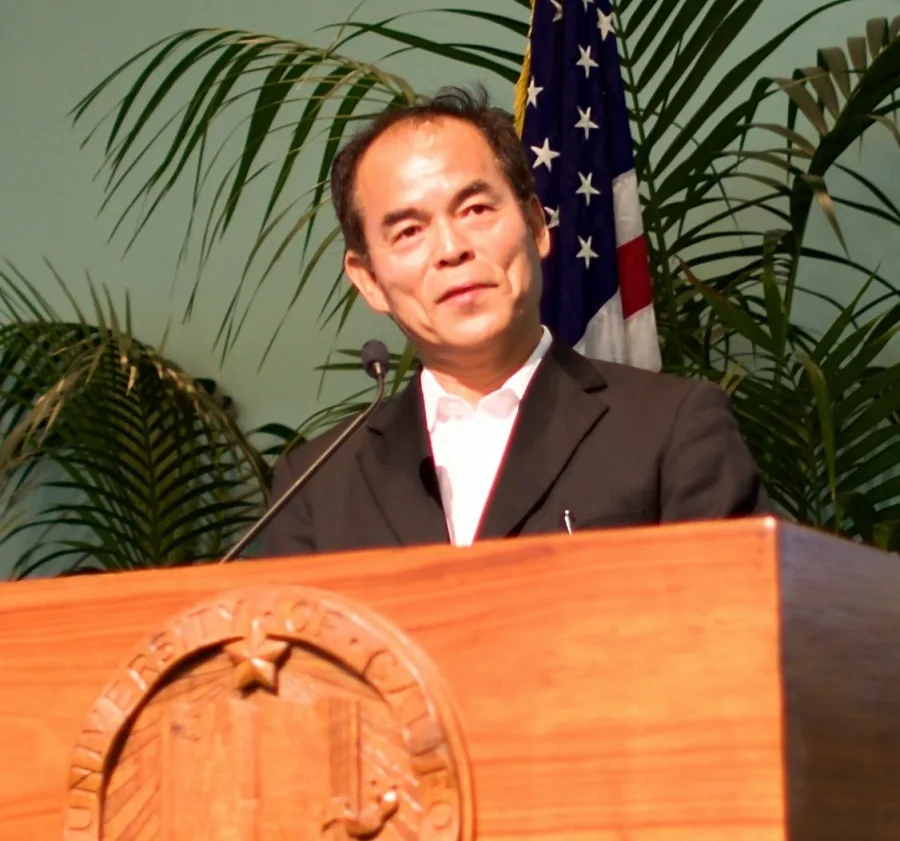
Shuji Nakamura
Japanese-American engineer who invented the bright blue LED
- Age
- 72 yrs
- Birthday in 197 days
- Works listed
- 2
- Invention, Book
- Honours
- 4
- Most recent 2015
- Profile views
- 4
- 0 followers
Shuji Nakamura is a Japanese-American engineer who, while at Nichia Corporation in the early 1990s, developed the first high-brightness blue light-emitting diode. Blue LEDs made white LED lighting possible, and he shared the 2014 Nobel Prize in Physics with Isamu Akasaki and Hiroshi Amano.
Biography
Background
Nakamura grew up in a fishing village on Shikoku and studied electronic engineering at the University of Tokushima. In 1979 he joined Nichia, a small chemical company.
The blue LED
Red and green LEDs existed, but a bright blue one had defeated large companies. Working largely alone, Nakamura improved methods for growing gallium nitride crystals and in 1993 Nichia announced a bright blue LED. Combined with phosphors it produced white light, leading to energy-saving LED lamps, screens and Blu-ray lasers.
Dispute
Nakamura received a small bonus for the invention and later sued Nichia; a Tokyo court awarded him a large sum in 2004, which was reduced in a settlement. The case changed how Japanese companies reward employee inventors.
California
He became a professor at the University of California, Santa Barbara, in 1999 and became a US citizen. He shared the 2014 Nobel Prize in Physics and the 2015 Draper Prize.
Timeline
-
1954
Born in Ikata, Ehime, Japan
-
1979
Joins Nichia
-
1993
Bright blue LED announced
-
1996
Blue laser diode
-
1999
Joins UC Santa Barbara
-
2004
Wins court case over invention reward
-
2006
Millennium Technology Prize
-
2014
Nobel Prize in Physics
Notable works
-
1993
Blue LED Invention
-
1997
The Blue Laser Diode Book
Awards and honours
-
Benjamin Franklin Medal
2002
-
Millennium Technology Prize
2006
-
Nobel Prize in Physics
2014
-
Charles Stark Draper Prize
2015
Did you know?
-
1
Colleagues nicknamed him “Slave Nakamura” over his small invention bonus, he has said.
-
2
LED lighting uses a fraction of the electricity of old bulbs.
-
3
He was given a ¥20,000 bonus for the blue LED.
Connections
Related people
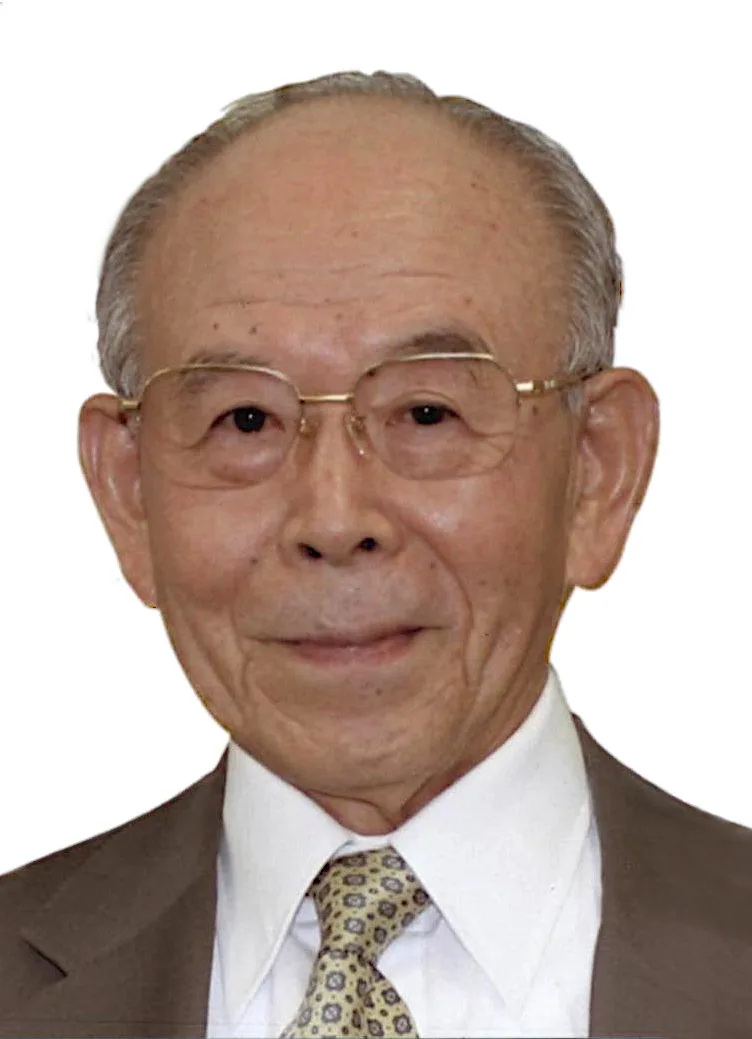
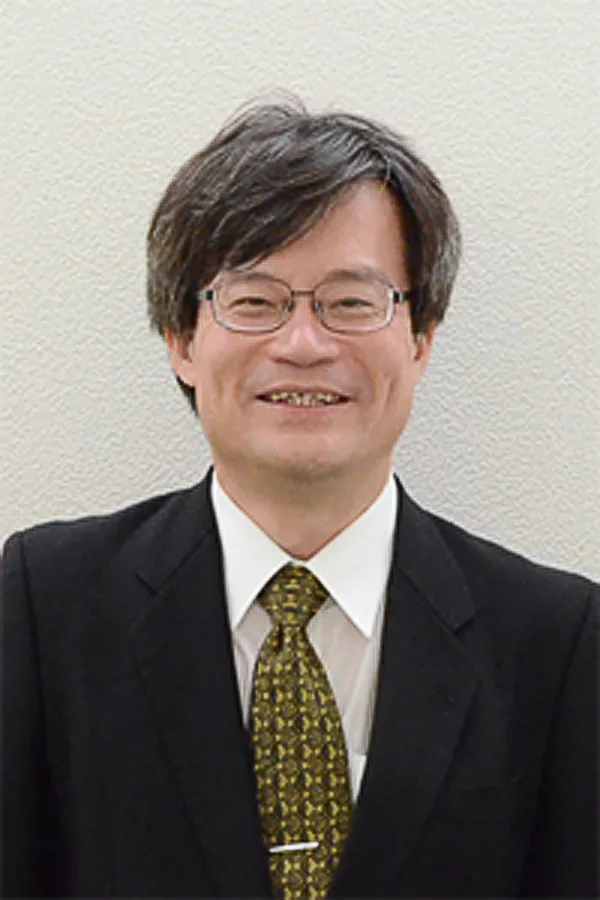

Frequently asked
Who is Shuji Nakamura?
Shuji Nakamura is a Japanese-American engineer who, while at Nichia Corporation in the early 1990s, developed the first high-brightness blue light-emitting diode. Blue LEDs made white LED lighting possible, and he shared the 2014 Nobel Prize in Physics with Isamu Akasaki and Hiroshi Amano.
How old is Shuji Nakamura?
Shuji Nakamura is 72 years old, born on 22 May 1954 in Ikata, Ehime, Japan.
Where is Shuji Nakamura from?
Shuji Nakamura was born in Ikata, Ehime, Japan.
What is Shuji Nakamura known for?
Shuji Nakamura is best known for High-brightness blue LED; white LEDs; blue laser diodes; Nobel Prize in Physics 2014.
What awards has Shuji Nakamura received?
Notable honours include Benjamin Franklin Medal (2002), Millennium Technology Prize (2006), Nobel Prize in Physics (2014), Charles Stark Draper Prize (2015).
References
- Shuji Nakamura — Wikipedia. Wikipedia. Retrieved 4 November 2026.
- Shuji Nakamura — Britannica. Encyclopaedia Britannica. Retrieved 4 November 2026.
- Shuji Nakamura — IMDb. IMDb. Retrieved 4 November 2026.
- Shuji Nakamura — Nobel Prize facts. NobelPrize.org. Retrieved 4 November 2026.
- Shuji Nakamura — Hindi Wikipedia. Wikipedia (Hindi). Retrieved 4 November 2026.
- Shuji Nakamura (Q730065) — structured data. Wikidata. Retrieved 4 November 2026.
Includes material from the Wikipedia article “Shuji Nakamura”, licensed under CC BY-SA 4.0. That text is available under the same licence. Learn more
External links
About this profile
- Researched by the TrackFame editorial team; reviewed by Sanjay Sokal under our editorial policy
- First published 4 November 2026
- Last updated
Cite this page
“Shuji Nakamura.” TrackFame, last updated 5 November 2026. https://trackfame.com/person/shuji-nakamura
Discussion 0
Sign in or create an account to join the discussion.
No comments yet — be the first.
More in Science
 Science
Margaret Hamilton
MIT engineer who led the software for the Apollo Moon landings and coined “software engineering”
1936 – 2026
 Science
Marvin Minsky
Co-founder of MIT’s artificial intelligence laboratory and a founding father of AI
1927 – 2016
 Science
Nikola Tesla
Serbian-American inventor of the alternating-current induction motor
1856 – 1943
 Science
Yann LeCun
French-American AI pioneer who invented convolutional neural networks
Born 1959
 Science
M. Visvesvaraya
Engineer and statesman, whose birthday is India’s Engineers’ Day
1860 – 1962
 Science
Peter Naur
Danish computer scientist who edited the ALGOL 60 report and refined Backus–Naur form
1928 – 2016