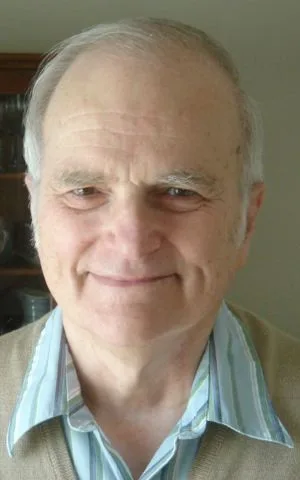
Richard E. Stearns
Co-founder of computational complexity theory with Juris Hartmanis
- Lived
- 90 yrs
- 1936 – 2026
- Works listed
- 2
- Paper, Book
- Honours
- 2
- Most recent 1995
- Profile views
- 2
- 0 followers
Richard Stearns was an American computer scientist who, with Juris Hartmanis, wrote the 1965 paper that founded computational complexity theory. He shared the 1993 Turing Award with Hartmanis and later taught at the University at Albany.
Biography
Education
Stearns studied mathematics at Carleton College and earned his PhD at Princeton in 1961 with a thesis on game theory.
Complexity theory
At General Electric’s research laboratory he worked with Juris Hartmanis on “On the Computational Complexity of Algorithms” (1965). The paper defined how to measure the time an algorithm needs and showed a hierarchy of increasingly hard problems, laying the foundations of complexity theory.
Later research
Stearns also worked on automata, formal languages and game theory, receiving the Frederick W. Lanchester Prize in 1995 for work with Robert Aumann on repeated games. He joined the State University of New York at Albany in 1978.
Legacy
He shared the 1993 Turing Award with Hartmanis. He died on 29 August 2026, aged 90.
Timeline
-
1936
Born in Caldwell, New Jersey, United States
-
1961
PhD from Princeton
-
1965
Complexity paper with Hartmanis
-
1978
Joins the University at Albany
-
1993
Turing Award
-
1995
Lanchester Prize
-
2026
Died, aged 90
Notable works
-
1965
On the Computational Complexity of Algorithms Paper
With Juris Hartmanis.
-
1995
Repeated Games with Incomplete Information Book
With Robert Aumann and Michael Maschler.
Awards and honours
-
Turing Award
1993
-
Frederick W. Lanchester Prize
1995
Did you know?
-
1
His PhD was in game theory.
-
2
His game theory collaborator Robert Aumann later won the Nobel Prize in economics.
-
3
He spent most of his teaching career at Albany.
Connections
Also born on 5 July

Frequently asked
Who is Richard E. Stearns?
Richard Stearns was an American computer scientist who, with Juris Hartmanis, wrote the 1965 paper that founded computational complexity theory. He shared the 1993 Turing Award with Hartmanis and later taught at the University at Albany.
When did Richard E. Stearns die?
Richard E. Stearns died on 29 August 2026 at the age of 90.
Where is Richard E. Stearns from?
Richard E. Stearns was born in Caldwell, New Jersey, United States.
What is Richard E. Stearns known for?
Richard E. Stearns is best known for Founding computational complexity theory; Turing Award 1993.
What awards has Richard E. Stearns received?
Notable honours include Turing Award (1993), Frederick W. Lanchester Prize (1995).
References
- Richard E. Stearns — Wikipedia. Wikipedia. Retrieved 4 November 2026.
- Richard E. Stearns — Britannica. Encyclopaedia Britannica. Retrieved 4 November 2026.
- Richard E. Stearns — Goodreads author page. Goodreads. Retrieved 4 November 2026.
- Official website. www.cs.albany.edu. Retrieved 4 November 2026.
- Richard E. Stearns (Q92822) — structured data. Wikidata. Retrieved 4 November 2026.
Includes material from the Wikipedia article “Richard E. Stearns”, licensed under CC BY-SA 4.0. That text is available under the same licence. Learn more
External links
About this profile
- Researched by the TrackFame editorial team; reviewed by Sanjay Sokal under our editorial policy
- First published 4 November 2026
- Last updated
Cite this page
“Richard E. Stearns.” TrackFame, last updated 5 November 2026. https://trackfame.com/person/richard-e-stearns
Discussion 0
Sign in or create an account to join the discussion.
No comments yet — be the first.
More in Science
 Science
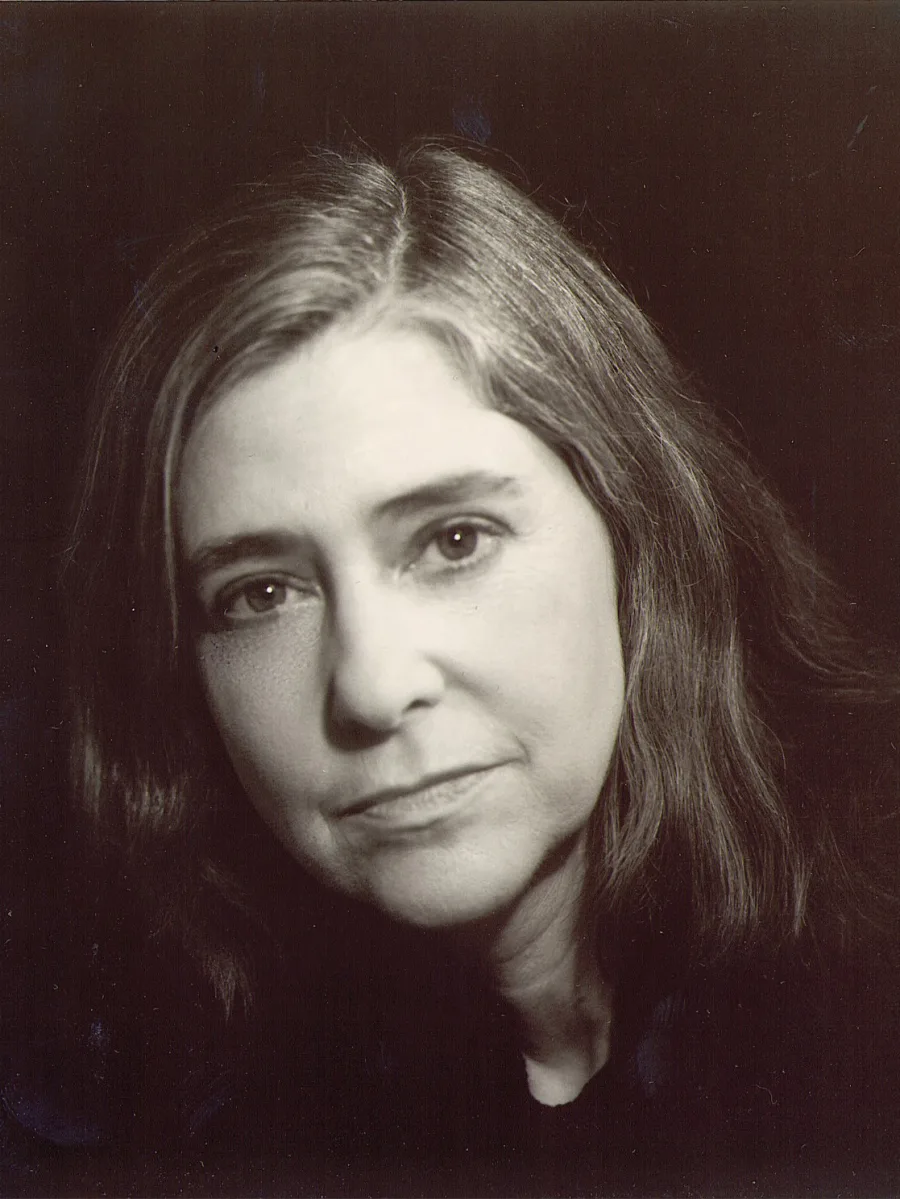
Margaret Hamilton
MIT engineer who led the software for the Apollo Moon landings and coined “software engineering”
1936 – 2026
 Science
Marvin Minsky
Co-founder of MIT’s artificial intelligence laboratory and a founding father of AI
1927 – 2016
 Science
Nikola Tesla
Serbian-American inventor of the alternating-current induction motor
1856 – 1943
 Science
Yann LeCun
French-American AI pioneer who invented convolutional neural networks
Born 1959
 Science
Michael Faraday
Self-taught scientist who discovered electromagnetic induction
1791 – 1867
 Science
Peter Norvig
Google’s former director of research and co-author of the leading AI textbook
Born 1956