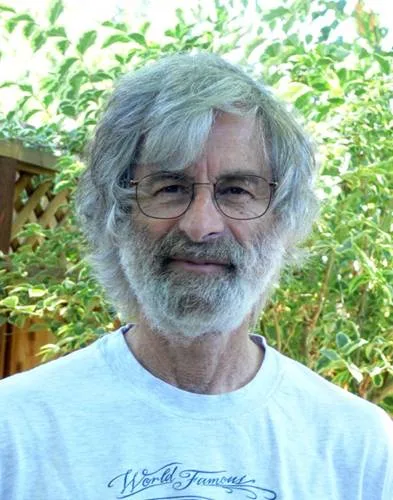
Leslie Lamport
Distributed-systems pioneer and creator of LaTeX
- Age
- 85 yrs
- Birthday in 94 days
- Works listed
- 3
- Paper, Software
- Honours
- 3
- Most recent 2013
- Profile views
- 0
- 0 followers
Leslie Lamport is an American computer scientist whose work on clocks, consensus and fault tolerance laid the foundations of distributed computing, which runs today’s cloud services. He also created LaTeX, the document system used by scientists worldwide, and received the Turing Award in 2013.
Biography
Education
Lamport attended the Bronx High School of Science, studied mathematics at MIT and earned his PhD in mathematics at Brandeis University in 1972.
Time and order
His 1978 paper “Time, Clocks, and the Ordering of Events in a Distributed System” showed how computers without a shared clock can agree on the order of events using logical timestamps. It is among the most cited papers in computer science.
Consensus
He formulated the Byzantine generals problem (1982), about reaching agreement when some participants are faulty or malicious, and invented the Paxos algorithm for consensus. Paxos and its descendants keep data consistent in systems at Google, Amazon and Microsoft.
LaTeX and TLA+
In the early 1980s he wrote LaTeX, a set of macros that made Donald Knuth’s TeX easy to use; it became the standard for scientific papers. He later created TLA+, a language for specifying and checking system designs, used by Amazon Web Services and others. He worked at SRI, DEC and, from 2001, Microsoft Research.
Timeline
-
1941
Born in New York City, United States
-
1972
PhD from Brandeis
-
1974
Bakery algorithm
-
1978
Logical clocks paper
-
1982
Byzantine generals problem
-
1984
LaTeX released
-
1998
Paxos paper published
-
2001
Joins Microsoft Research
-
2013
Turing Award
Notable works
-
1978
Time, Clocks, and the Ordering of Events in a Distributed System Paper
-
1998
The Part-Time Parliament Paper
The Paxos paper.
-
1984
LaTeX Software
Awards and honours
-
Dijkstra Prize
2000
-
IEEE John von Neumann Medal
2008
-
Turing Award
2013
Did you know?
-
1
The “La” in LaTeX comes from Lamport.
-
2
He described Paxos as the parliament of a fictional Greek island, which confused reviewers for years.
-
3
He defined a distributed system as one where a computer you didn’t know existed can make your own computer unusable.
Connections
Related people
Frequently asked
Who is Leslie Lamport?
Leslie Lamport is an American computer scientist whose work on clocks, consensus and fault tolerance laid the foundations of distributed computing, which runs today’s cloud services. He also created LaTeX, the document system used by scientists worldwide, and received the Turing Award in 2013.
How old is Leslie Lamport?
Leslie Lamport is 85 years old, born on 7 February 1941 in New York City, United States.
Where is Leslie Lamport from?
Leslie Lamport was born in New York City, United States.
What is Leslie Lamport known for?
Leslie Lamport is best known for Logical clocks; Paxos; the Byzantine generals problem; LaTeX; TLA+; Turing Award 2013.
What awards has Leslie Lamport received?
Notable honours include Dijkstra Prize (2000), IEEE John von Neumann Medal (2008), Turing Award (2013).
References
- Leslie Lamport — Wikipedia. Wikipedia. Retrieved 4 November 2026.
- Leslie Lamport — Britannica. Encyclopaedia Britannica. Retrieved 4 November 2026.
- Official website. www.lamport.org. Retrieved 4 November 2026.
- Leslie Lamport (Q92613) — structured data. Wikidata. Retrieved 4 November 2026.
Includes material from the Wikipedia article “Leslie Lamport”, licensed under CC BY-SA 4.0. That text is available under the same licence. Learn more
External links
About this profile
- Researched by the TrackFame editorial team; reviewed by Sanjay Sokal under our editorial policy
- First published 4 November 2026
- Last updated
Cite this page
“Leslie Lamport.” TrackFame, last updated 4 November 2026. https://trackfame.com/person/leslie-lamport
Discussion 0
Sign in or create an account to join the discussion.
No comments yet — be the first.
More in Science
 Science
Charles K. Kao
“Godfather of broadband” who showed glass fibres could carry light over long distances
1933 – 2018
 Science
Yuri Milner
Investor behind DST Global and the Breakthrough Prizes
Born 1961
 Science
Ilya Sutskever
Deep-learning researcher who co-founded OpenAI and Safe Superintelligence
Born 1986
 Science
Yann LeCun
French-American AI pioneer who invented convolutional neural networks
Born 1959
 Science
Jeff Hawkins
Inventor of the PalmPilot and neuroscientist of intelligence
Born 1957
 Science
Charles Babbage
Victorian mathematician who designed the first programmable mechanical computer
1791 – 1871