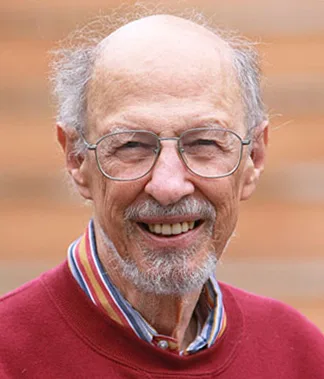
Fernando J. Corbató
MIT pioneer of time-sharing and creator of the computer password
- Lived
- 93 yrs
- 1926 – 2019
- Works listed
- 2
- Operating system
- Honours
- 3
- Most recent 1990
- Profile views
- 0
- 0 followers
Fernando Corbató was an American computer scientist at MIT who led the development of CTSS, one of the first time-sharing systems, and the influential Multics operating system. CTSS introduced the use of passwords on computers. He received the Turing Award in 1990.
Biography
Background
Corbató was born in Oakland to a Spanish father who taught literature. He served in the US Navy, studied physics at Caltech and earned a PhD in physics at MIT in 1956.
Time-sharing
In the 1950s users submitted programs and waited hours for results. Corbató’s Compatible Time-Sharing System, first demonstrated in 1961, let many users work at the same computer simultaneously from terminals. CTSS introduced password log-ins and early forms of email and file sharing.
Multics
He then led Multics, a joint project of MIT, Bell Labs and General Electric begun in 1964. Multics pioneered hierarchical file systems, security rings and dynamic linking; its ideas inspired Ken Thompson and Dennis Ritchie to create Unix.
Legacy
Corbató received the Turing Award in 1990. Corbató’s law holds that programmers write about the same number of lines of code per day regardless of language. He died in 2019 aged 93.
Timeline
-
1926
Born in Oakland, California, United States
-
1956
PhD in physics from MIT
-
1961
CTSS demonstrated
-
1964
Multics project begins
-
1966
W. Wallace McDowell Award
-
1990
Turing Award
-
1996
Retires from MIT
-
2019
Died, aged 93
Notable works
-
1961
Compatible Time-Sharing System Operating system
-
1969
Multics Operating system
With MIT, GE and Bell Labs.
Awards and honours
-
W. Wallace McDowell Award
1966
-
Harry H. Goode Memorial Award
1980
-
Turing Award
1990
Did you know?
-
1
In later life he acknowledged that passwords had become a security headache.
-
2
Unix’s name is a pun on Multics.
-
3
His father taught Spanish literature at UCLA.
Connections

Frequently asked
Who is Fernando J. Corbató?
Fernando Corbató was an American computer scientist at MIT who led the development of CTSS, one of the first time-sharing systems, and the influential Multics operating system. CTSS introduced the use of passwords on computers. He received the Turing Award in 1990.
When did Fernando J. Corbató die?
Fernando J. Corbató died on 12 July 2019 at the age of 93.
Where is Fernando J. Corbató from?
Fernando J. Corbató was born in Oakland, California, United States.
What is Fernando J. Corbató known for?
Fernando J. Corbató is best known for Compatible Time-Sharing System (CTSS); Multics; first computer passwords; Turing Award 1990.
What awards has Fernando J. Corbató received?
Notable honours include W. Wallace McDowell Award (1966), Harry H. Goode Memorial Award (1980), Turing Award (1990).
References
- Fernando J. Corbató — Wikipedia. Wikipedia. Retrieved 4 November 2026.
- Fernando J. Corbató — Britannica. Encyclopaedia Britannica. Retrieved 4 November 2026.
- Fernando J. Corbató (Q92625) — structured data. Wikidata. Retrieved 4 November 2026.
Includes material from the Wikipedia article “Fernando J. Corbató”, licensed under CC BY-SA 4.0. That text is available under the same licence. Learn more
External links
About this profile
- Researched by the TrackFame editorial team; reviewed by Sanjay Sokal under our editorial policy
- First published 4 November 2026
- Last updated
Cite this page
“Fernando J. Corbató.” TrackFame, last updated 4 November 2026. https://trackfame.com/person/fernando-corbato
Discussion 0
Sign in or create an account to join the discussion.
No comments yet — be the first.
More in Science
 Science
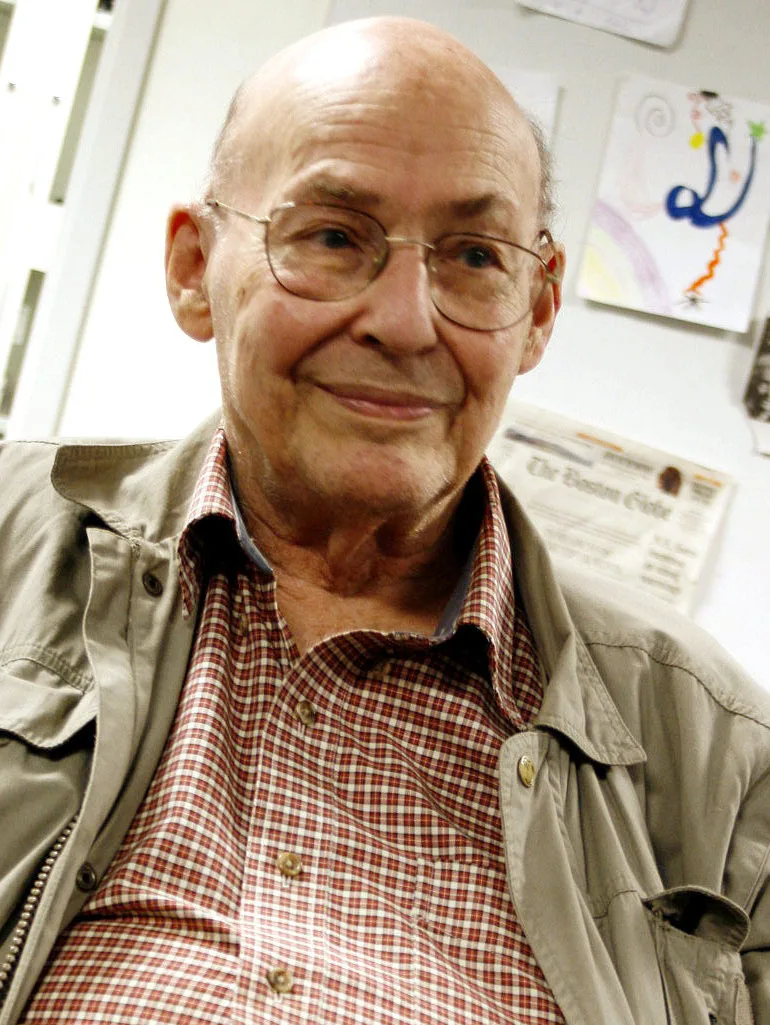
Marvin Minsky
Co-founder of MIT’s artificial intelligence laboratory and a founding father of AI
1927 – 2016
 Science
Peter Naur
Danish computer scientist who edited the ALGOL 60 report and refined Backus–Naur form
1928 – 2016
 Science
Yann LeCun
French-American AI pioneer who invented convolutional neural networks
Born 1959
 Science
Margaret Hamilton
MIT engineer who led the software for the Apollo Moon landings and coined “software engineering”
1936 – 2026
 Science
Alan Turing
Mathematician who founded computer science and helped break the Enigma code
1912 – 1954
John Cocke
IBM researcher who invented RISC computer architecture
1925 – 2002