James H. Wilkinson
English mathematician who laid the foundations of reliable numerical computing
- Lived
- 67 yrs
- 1919 – 1986
- Works listed
- 3
- Book
- Honours
- 3
- Most recent 1970
- Profile views
- 4
- 0 followers
James Wilkinson was an English mathematician who showed how to analyse the rounding errors that computers make when solving equations. His methods underpin the numerical software used in science and engineering, and he received the Turing Award in 1970.
Biography
Early life
Wilkinson won a scholarship to Trinity College, Cambridge, at 16 and graduated with first-class honours in mathematics. During the war he worked on ballistics calculations.
Working with Turing
In 1946 he joined the National Physical Laboratory, where he worked with Alan Turing on the design of the ACE computer. After Turing left, Wilkinson helped build the Pilot ACE, which first ran in 1950 and was one of the fastest computers of its time.
Backward error analysis
Wilkinson’s great contribution was to show that, instead of tracking every rounding error, one could ask whether the computed answer is the exact answer to a slightly changed problem. This “backward error analysis” made it possible to prove that algorithms are stable. His books on rounding errors and on the algebraic eigenvalue problem became standard references.
Software legacy
He co-edited the Handbook for Automatic Computation, whose algorithms led directly to the EISPACK and LINPACK libraries and later LAPACK, still used inside modern scientific software. He died in 1986.
Timeline
-
1919
Born in Strood, Kent, England
-
1946
Joins the National Physical Laboratory and works with Turing
-
1950
Pilot ACE runs its first program
-
1963
Publishes Rounding Errors in Algebraic Processes
-
1965
Publishes The Algebraic Eigenvalue Problem
-
1969
Elected Fellow of the Royal Society
-
1970
Receives the Turing Award
-
1971
Handbook for Automatic Computation, vol. II
-
1986
Died, aged 67
Notable works
-
1963
Rounding Errors in Algebraic Processes Book
-
1965
The Algebraic Eigenvalue Problem Book
-
1971
Handbook for Automatic Computation: Linear Algebra Book
With Christian Reinsch.
Awards and honours
-
Fellow of the Royal Society
1969
-
Turing Award
1970
-
John von Neumann Prize
1970
Did you know?
-
1
The “Wilkinson polynomial” is a famous example of how tiny changes can wreck a computed answer.
-
2
The Pilot ACE is preserved at the Science Museum in London.
-
3
The James H. Wilkinson Prize for Numerical Software is named after him.
Connections
Related people
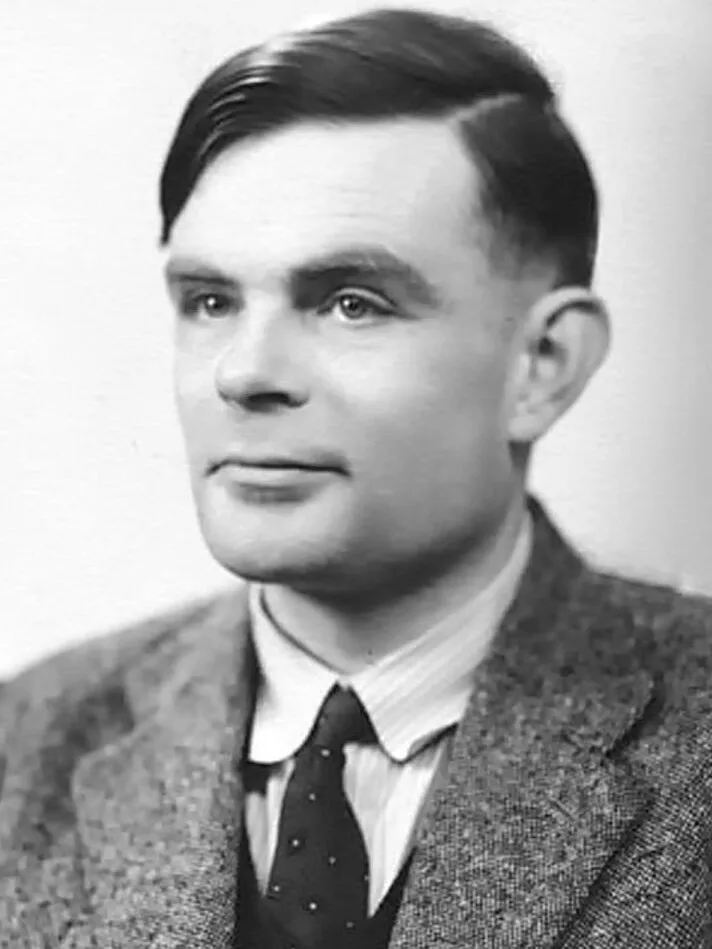


Frequently asked
Who is James H. Wilkinson?
James Wilkinson was an English mathematician who showed how to analyse the rounding errors that computers make when solving equations. His methods underpin the numerical software used in science and engineering, and he received the Turing Award in 1970.
When did James H. Wilkinson die?
James H. Wilkinson died on 5 October 1986 at the age of 67.
Where is James H. Wilkinson from?
James H. Wilkinson was born in Strood, Kent, England.
What is James H. Wilkinson known for?
James H. Wilkinson is best known for Backward error analysis; numerical linear algebra; Pilot ACE; Turing Award 1970.
What awards has James H. Wilkinson received?
Notable honours include Fellow of the Royal Society (1969), Turing Award (1970), John von Neumann Prize (1970).
References
- James H. Wilkinson — Wikipedia. Wikipedia. Retrieved 4 November 2026.
- James H. Wilkinson — Britannica. Encyclopaedia Britannica. Retrieved 4 November 2026.
- James H. Wilkinson (Q62877) — structured data. Wikidata. Retrieved 4 November 2026.
Includes material from the Wikipedia article “James H. Wilkinson”, licensed under CC BY-SA 4.0. That text is available under the same licence. Learn more
External links
About this profile
- Researched by the TrackFame editorial team; reviewed by Sanjay Sokal under our editorial policy
- First published 4 November 2026
- Last updated
Cite this page
“James H. Wilkinson.” TrackFame, last updated 5 November 2026. https://trackfame.com/person/james-h-wilkinson
Discussion 0
Sign in or create an account to join the discussion.
No comments yet — be the first.
More in Science
 Science
Marvin Minsky
Co-founder of MIT’s artificial intelligence laboratory and a founding father of AI
1927 – 2016
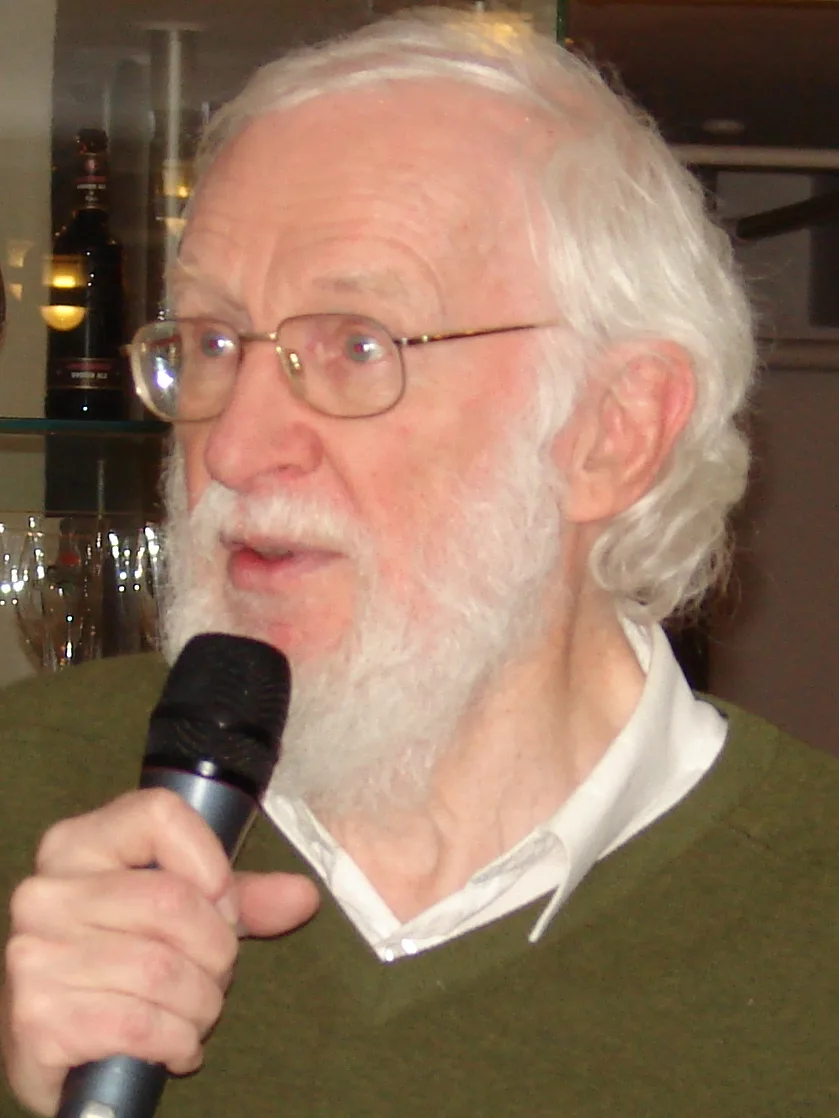 Science
Peter Naur
Danish computer scientist who edited the ALGOL 60 report and refined Backus–Naur form
1928 – 2016
 Science
Yann LeCun
French-American AI pioneer who invented convolutional neural networks
Born 1959
 Science
Konrad Zuse
German engineer who built the first working programmable computer
1910 – 1995
 Science
Margaret Hamilton
MIT engineer who led the software for the Apollo Moon landings and coined “software engineering”
1936 – 2026
 Science
Rajeev Motwani
Stanford professor who mentored Google’s founders
1962 – 2009