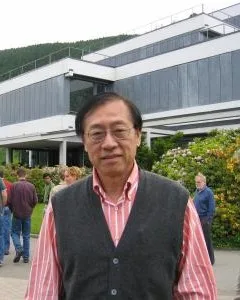
Andrew Yao
Turing Award-winning theorist who built China’s top computer science programme
- Age
- 79 yrs
- Birthday in 48 days
- Works listed
- 2
- Paper
- Honours
- 3
- Most recent 2021
- Profile views
- 4
- 0 followers
Andrew Yao is a Chinese computer scientist whose work on the theory of computation, including communication complexity and secure multi-party computation, earned him the Turing Award in 2000. He later left Princeton to found the elite “Yao Class” at Tsinghua University in Beijing.
Biography
Early life
Yao was born in Shanghai in 1946 and grew up in Taiwan. He studied physics at National Taiwan University and earned a PhD in physics from Harvard in 1972, then a second PhD in computer science from the University of Illinois in 1975.
Theory of computation
Yao introduced the minimax principle for analysing randomised algorithms, founded communication complexity — how much information two parties must exchange to compute something — and posed the “millionaires’ problem”, the starting point of secure multi-party computation, in which parties compute a result without revealing their private data.
Career in the US
He taught at MIT, Stanford, Berkeley and Princeton. The Turing Award in 2000 recognised his contributions to the theory of computation, including pseudorandom number generation and cryptography.
Return to China
In 2004 he moved to Tsinghua University, where he set up the Institute for Interdisciplinary Information Sciences and the Yao Class for top undergraduates, whose alumni include leading AI entrepreneurs. He renounced US citizenship in 2015 and joined the Chinese Academy of Sciences.
Timeline
-
1946
Born in Shanghai, China
-
1972
PhD in physics from Harvard
-
1975
PhD in computer science from Illinois
-
1979
Introduces communication complexity
-
1982
Poses the millionaires’ problem
-
2000
Turing Award
-
2004
Joins Tsinghua University
-
2021
Kyoto Prize
Notable works
-
1979
Some complexity questions related to distributive computing Paper
-
1982
Protocols for secure computations Paper
Awards and honours
-
Knuth Prize
1996
-
Turing Award
2000
-
Kyoto Prize
2021
Did you know?
-
1
He holds doctorates in both physics and computer science.
-
2
The Yao Class is one of China’s most selective university programmes.
-
3
His millionaires’ problem asks how two people can find out who is richer without revealing their wealth.
Connections

Frequently asked
Who is Andrew Yao?
Andrew Yao is a Chinese computer scientist whose work on the theory of computation, including communication complexity and secure multi-party computation, earned him the Turing Award in 2000. He later left Princeton to found the elite “Yao Class” at Tsinghua University in Beijing.
How old is Andrew Yao?
Andrew Yao is 79 years old, born on 24 December 1946 in Shanghai, China.
Where is Andrew Yao from?
Andrew Yao was born in Shanghai, China.
What is Andrew Yao known for?
Andrew Yao is best known for Yao’s minimax principle; communication complexity; secure computation; the Yao Class at Tsinghua; Turing Award 2000.
What awards has Andrew Yao received?
Notable honours include Knuth Prize (1996), Turing Award (2000), Kyoto Prize (2021).
References
- Andrew Yao — Wikipedia. Wikipedia. Retrieved 4 November 2026.
- Andrew Yao — Britannica. Encyclopaedia Britannica. Retrieved 4 November 2026.
- Official website. iiis.tsinghua.edu.cn. Retrieved 4 November 2026.
- Andrew Yao (Q62888) — structured data. Wikidata. Retrieved 4 November 2026.
Includes material from the Wikipedia article “Andrew Yao”, licensed under CC BY-SA 4.0. That text is available under the same licence. Learn more
External links
About this profile
- Researched by the TrackFame editorial team; reviewed by Sanjay Sokal under our editorial policy
- First published 4 November 2026
- Last updated
Cite this page
“Andrew Yao.” TrackFame, last updated 5 November 2026. https://trackfame.com/person/andrew-yao
Discussion 0
Sign in or create an account to join the discussion.
No comments yet — be the first.
More in Science
 Science
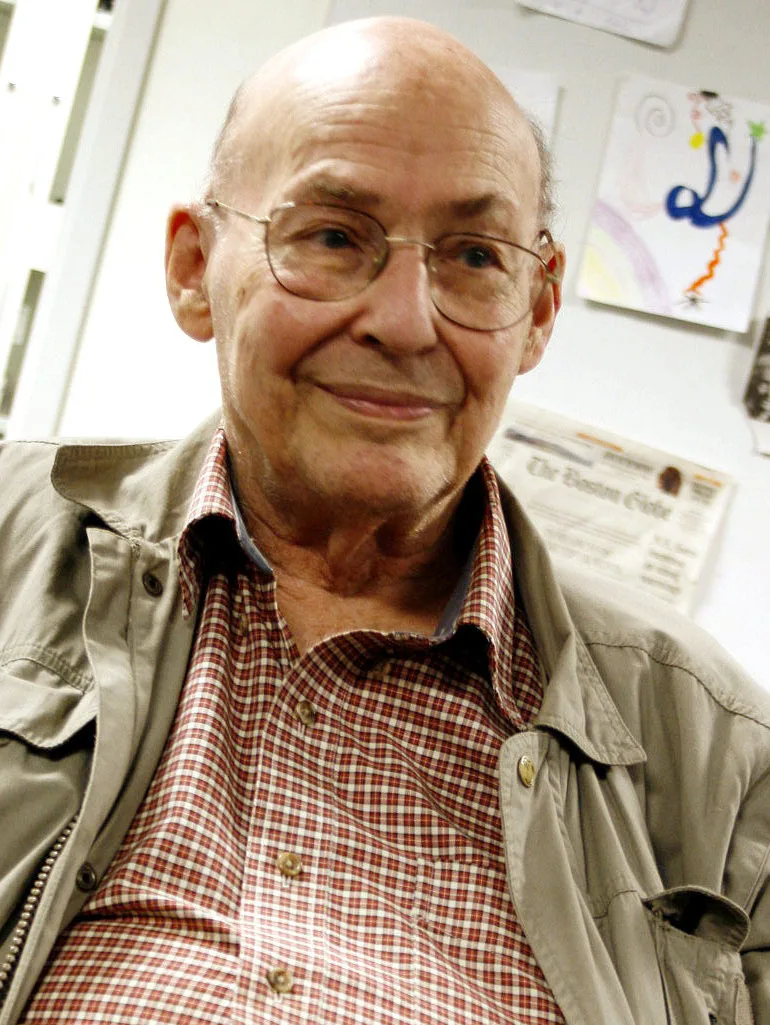
Marvin Minsky
Co-founder of MIT’s artificial intelligence laboratory and a founding father of AI
1927 – 2016
 Science
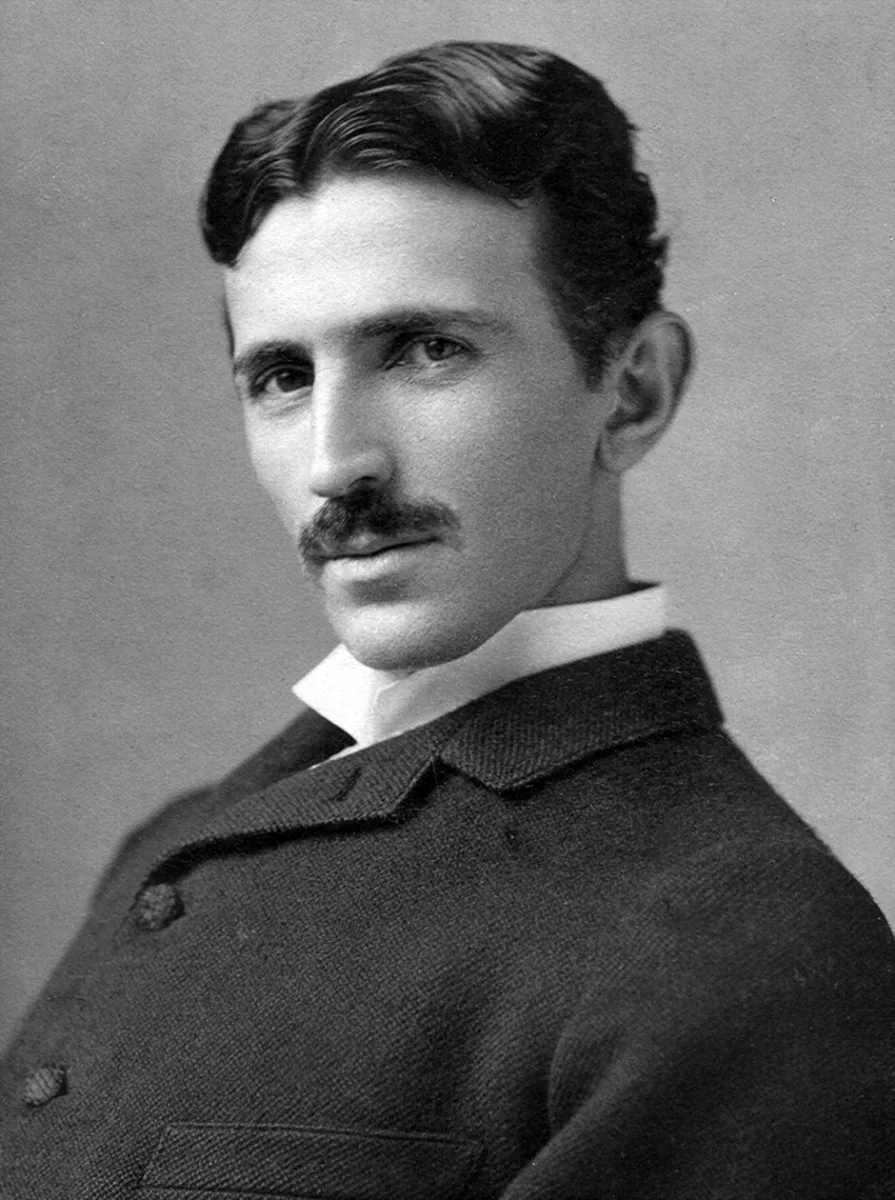
Nikola Tesla
Serbian-American inventor of the alternating-current induction motor
1856 – 1943
 Science
Margaret Hamilton
MIT engineer who led the software for the Apollo Moon landings and coined “software engineering”
1936 – 2026
 Science
Yann LeCun
French-American AI pioneer who invented convolutional neural networks
Born 1959
 Science
Peter Naur
Danish computer scientist who edited the ALGOL 60 report and refined Backus–Naur form
1928 – 2016
 Science
Michael Faraday
Self-taught scientist who discovered electromagnetic induction
1791 – 1867