Indian scientists who changed the world
Nobel laureates, self-taught geniuses and institution builders: ten Indian scientists whose work changed physics, mathematics, biology and agriculture.
By the TrackFame editorial team 2 min read

India’s scientific history is often told through ancient achievements — zero, the decimal system, early astronomy. But modern Indian scientists have also changed the world, often working with limited resources and in the face of colonial prejudice. Here are ten whose work still matters.
C. V. Raman: light and a Nobel Prize
In 1928, working in Calcutta with simple equipment, C. V. Raman discovered that light changes colour slightly when it is scattered by molecules — the Raman effect. In 1930 he became the first Asian to win a Nobel Prize in science. Raman spectroscopy is now used to identify substances in medicine, chemistry and even art restoration. India celebrates National Science Day on the anniversary of his discovery.
Srinivasa Ramanujan: the self-taught genius
A clerk in Madras with almost no formal training, Srinivasa Ramanujan filled notebooks with remarkable formulas and wrote to the Cambridge mathematician G. H. Hardy, who brought him to England. In a short life he produced thousands of results in number theory and infinite series, many of which mathematicians are still working to prove.
Jagadish Chandra Bose and Satyendra Nath Bose
Jagadish Chandra Bose was a pioneer of radio and microwave research and showed that plants respond to stimuli, inventing the crescograph to measure their growth. A generation later, Satyendra Nath Bose sent Albert Einstein a paper on the statistics of light particles that led to Bose–Einstein statistics. Particles called bosons are named after him.
Meghnad Saha and Subrahmanyan Chandrasekhar: reading the stars
Meghnad Saha’s ionisation equation of 1920 allowed astronomers to work out the temperatures of stars from their spectra. Subrahmanyan Chandrasekhar, C. V. Raman’s nephew, showed that stars above a certain mass cannot end as white dwarfs — the Chandrasekhar limit — and later shared the Nobel Prize in Physics.
Homi Bhabha: building institutions
Homi J. Bhabha was a talented physicist, but his greatest legacy was institutional. He founded the Tata Institute of Fundamental Research and led India’s atomic energy programme, designing a long-term plan to use the country’s thorium reserves for nuclear power.
Har Gobind Khorana and Venki Ramakrishnan: the code of life
Har Gobind Khorana helped crack the genetic code — showing which sequences of DNA letters correspond to which amino acids — and shared the 1968 Nobel Prize in Physiology or Medicine. Four decades later, Venki Ramakrishnan shared the 2009 Nobel Prize in Chemistry for revealing the structure of the ribosome, the machine that reads genetic instructions to build proteins.
M. S. Swaminathan: feeding a nation
In the 1960s India depended on food imports and faced the threat of famine. Agricultural scientist M. S. Swaminathan worked with Norman Borlaug to introduce high-yielding wheat varieties, leading the Green Revolution that made India self-sufficient in food grains. He won the first World Food Prize in 1987.
A shared lesson
These scientists came from very different backgrounds — a Madras clerk, a Bengali shopkeeper’s son, a Punjabi village boy. What unites them is persistence and a belief that world-class science could be done by Indians. Many also built institutions so that the next generation would not have to go abroad to do great work. Among the living, C. N. R. Rao continues that tradition of institution-building in materials chemistry.
People in this article
Science
C. V. Raman
Physicist; Nobel laureate who discovered the Raman effect
1888 – 1970
 Science
Srinivasa Ramanujan
Self-taught mathematician whose results still shape number theory
1887 – 1920
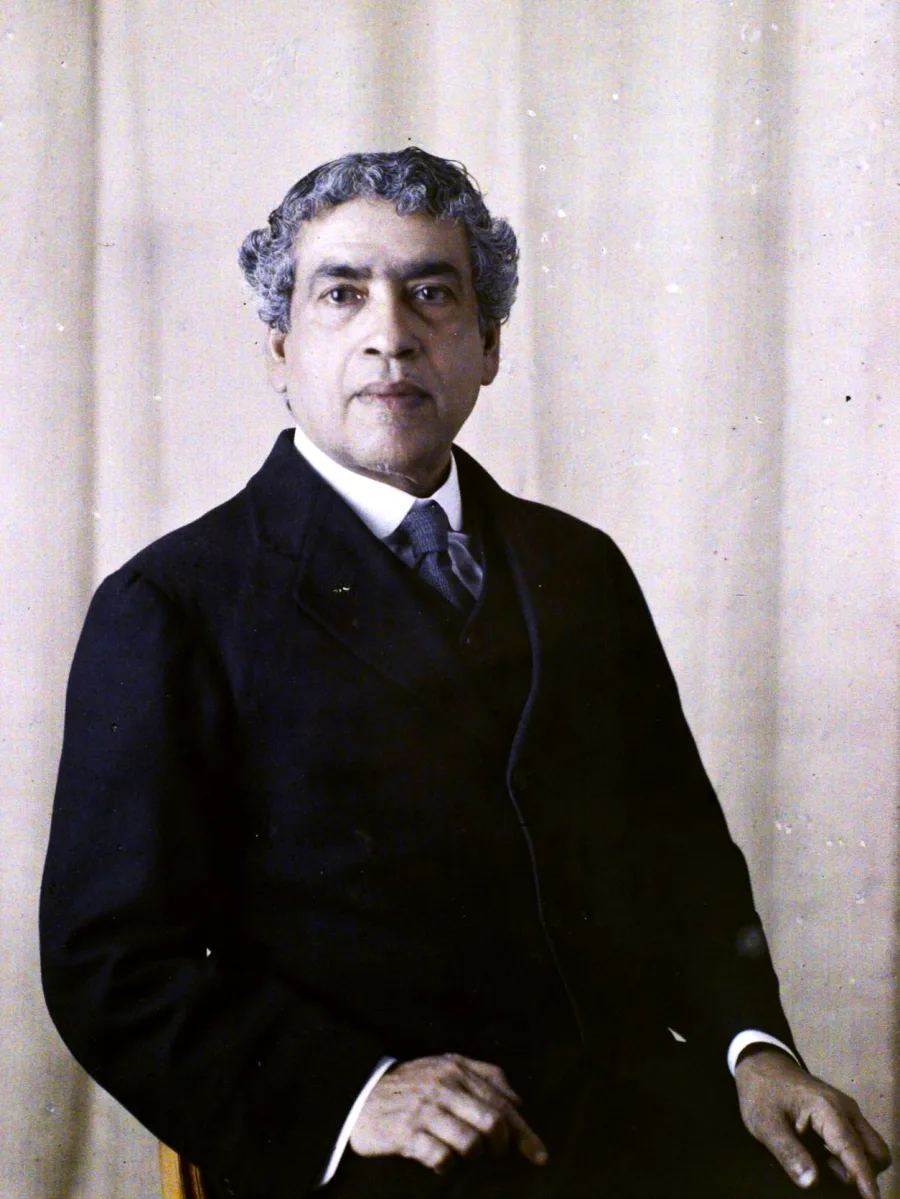 Science
Jagadish Chandra Bose
Physicist and plant biologist; pioneer of radio and microwave research
1858 – 1937
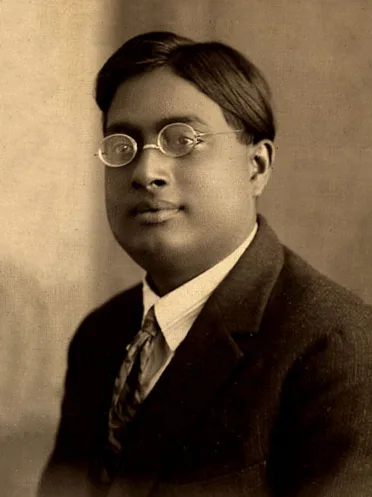 Science
Satyendra Nath Bose
Physicist after whom bosons are named
1894 – 1974
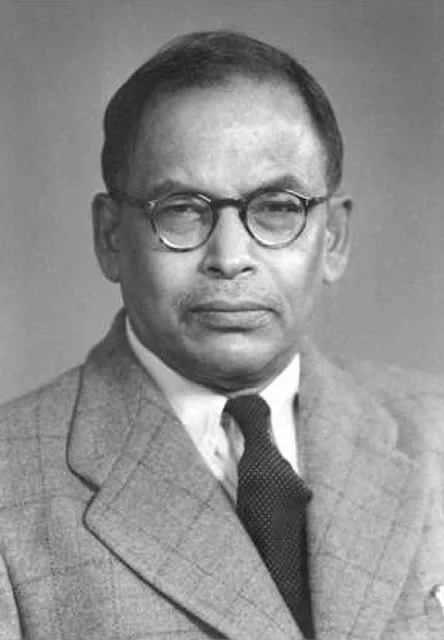 Science
Meghnad Saha
Astrophysicist known for the Saha ionisation equation
1893 – 1956
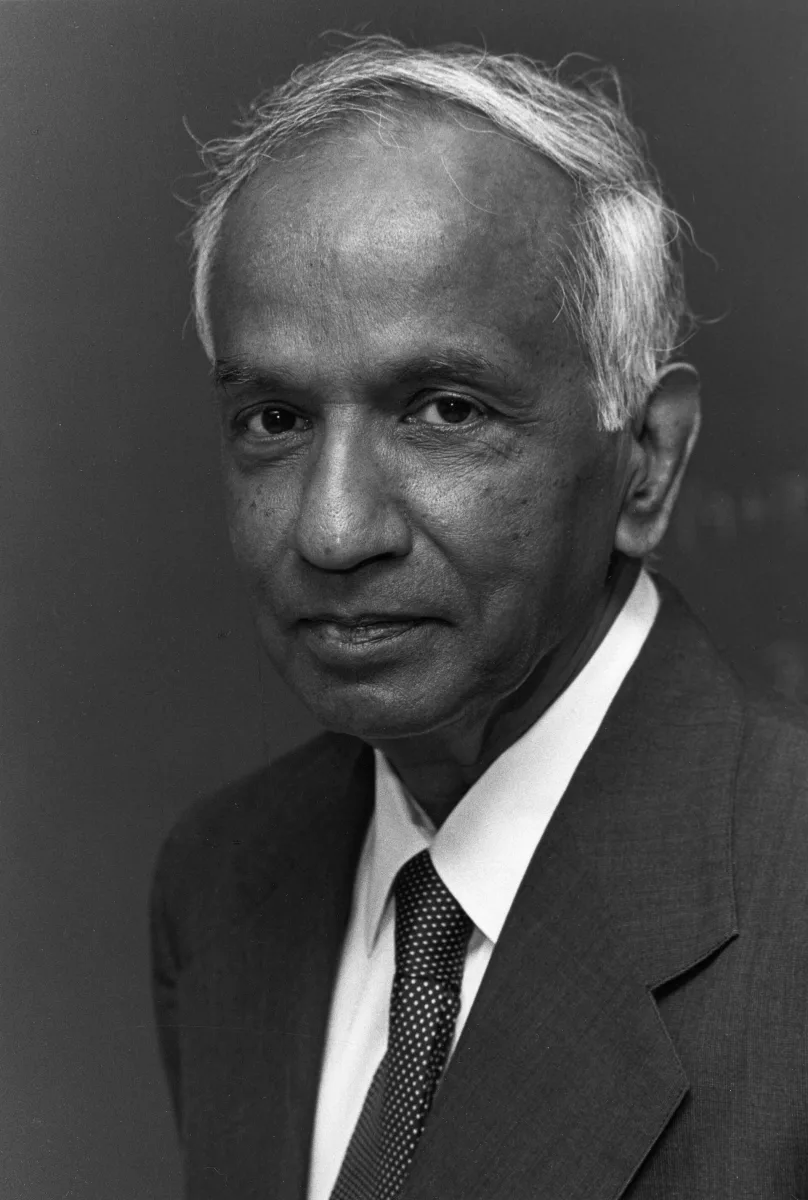 Science
Subrahmanyan Chandrasekhar
Astrophysicist who discovered the Chandrasekhar limit
1910 – 1995
 Science
Homi J. Bhabha
Nuclear physicist and father of India’s nuclear programme
1909 – 1966
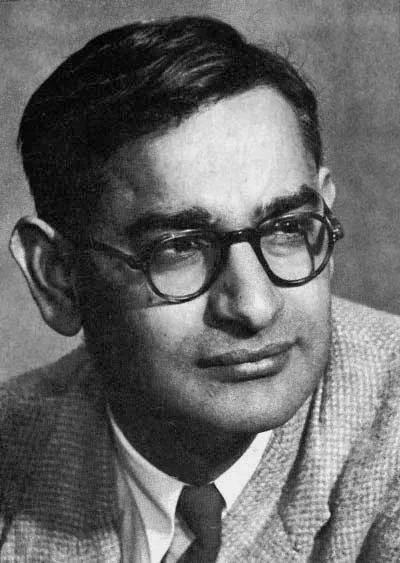 Science
Har Gobind Khorana
Biochemist who shared the Nobel Prize for cracking the genetic code
1922 – 2011
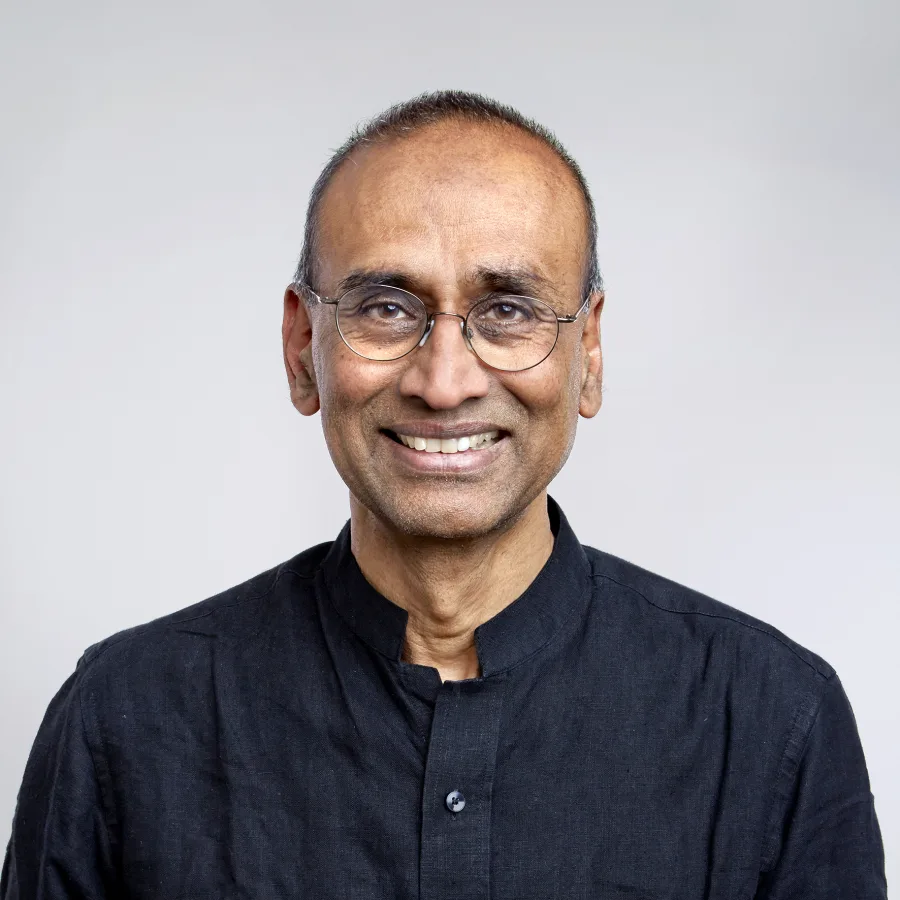 Science
Venki Ramakrishnan
Structural biologist and Nobel laureate who mapped the ribosome
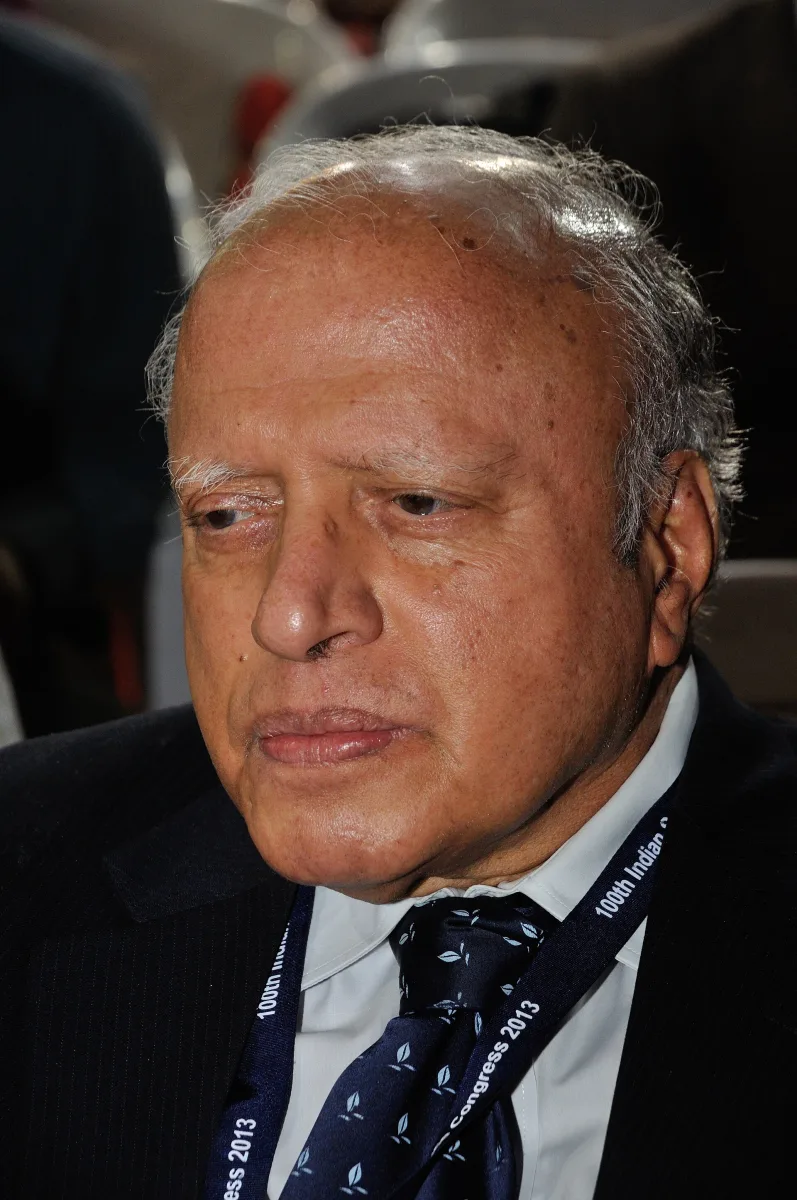 Science
M. S. Swaminathan
Agricultural scientist known as the father of India’s Green Revolution
1925 – 2023
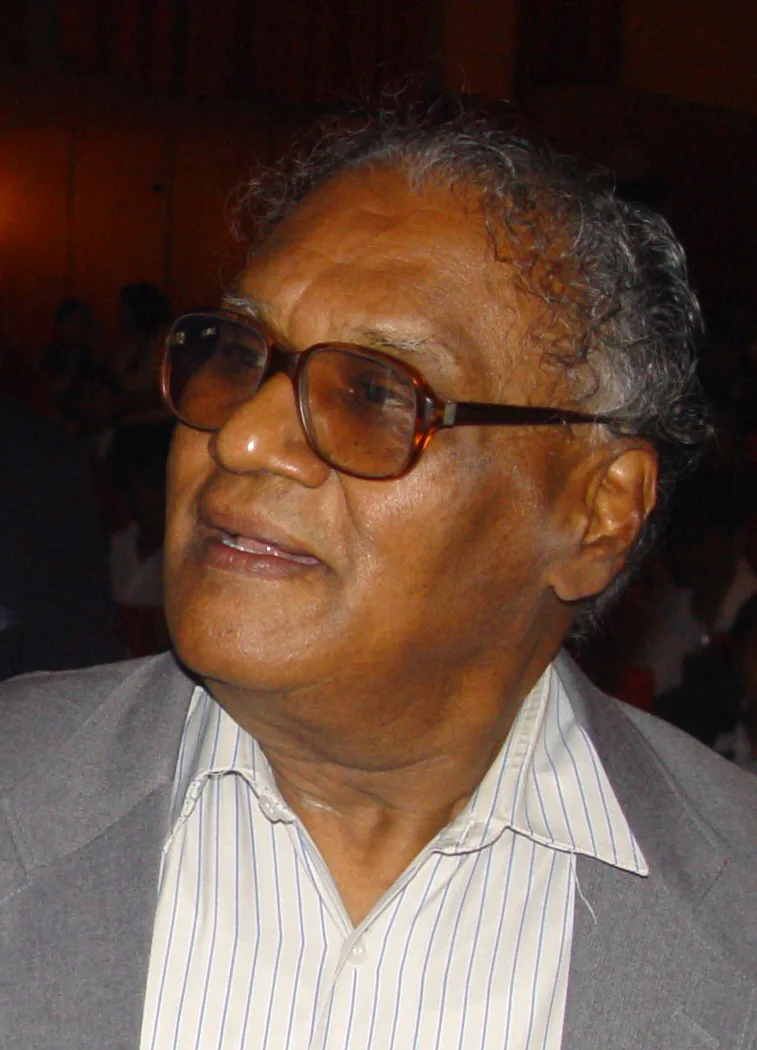 Science
C. N. R. Rao
Solid-state and materials chemist, Bharat Ratna
Born 1934
More articles
All articles
Film & TV
Bollywood under threat: from the blackbuck case to the Juhu firing
How a 1998 poaching case became the starting point of years of threats and shootings linked to film personalities — and how the industry and police have responded.
27 October 2026
Who is Lawrence Bishnoi? The jailed gangster linked to threats against Bollywood
Lawrence Bishnoi has been in jail since 2014, yet his name keeps appearing in investigations in India, Canada and the United States. Here is what is known, what is alleged and what is proven.
27 October 2026

Film & TV
Firing at Tiger Shroff’s car in Juhu: what we know so far
A factual, dated account of the October 2026 firing at Tiger Shroff’s car in Mumbai — the incident, the arrests, the claims that police are still verifying, and what remains unknown.
27 October 2026