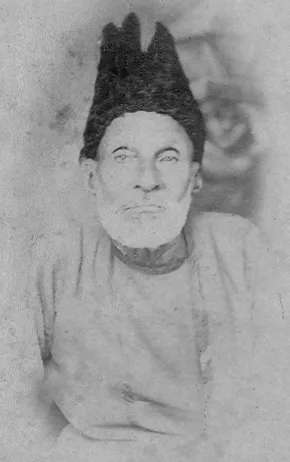
Mirza Ghalib
Urdu and Persian poet of the late Mughal era
- Lived
- 71 yrs
- 1797 – 1869
- Works listed
- 3
- Poetry, Book
- Honours
- 0
- Awards & distinctions
- Profile views
- 1
- 0 followers
Mirza Ghalib was the most celebrated poet of the Urdu language, writing ghazals of wit, philosophical depth and longing in the last decades of the Mughal Empire. Court poet to Bahadur Shah Zafar, he witnessed the revolt of 1857, and his letters are classics of Urdu prose. He died in 1869.
Biography
Early life
Ghalib was born in Agra into a family of Turkic aristocratic descent that served as soldiers. His father died when he was young, and he was raised by an uncle. He began writing poetry as a boy, married at thirteen and moved to Delhi, where he lived the rest of his life.
The ghazal
Ghalib wrote in Persian, which he considered his finer work, and in Urdu, for which he is now loved. His ghazals pack questions about God, love, fate and the self into two-line couplets full of irony and surprising images. Lines from his diwan are quoted across South Asia.
Court poet and 1857
In 1850 the Mughal emperor Bahadur Shah Zafar gave him titles and the task of writing a history of the dynasty, and in 1854 he became the emperor’s poetry teacher. He lived through the revolt of 1857 and the British destruction of Delhi, recording it in his Persian diary Dastanbuy and in letters.
Letters and legacy
Ghalib was often in debt and spent years pursuing a family pension, including a long journey to Calcutta. His informal, witty letters are among the first classics of modern Urdu prose. He died in Delhi on 15 February 1869; his house in Ballimaran, Old Delhi, is now a memorial, and his life inspired films and Gulzar’s television series Mirza Ghalib.
Timeline
-
1797
Born in Agra, Mughal Empire
-
1810
Marries and settles in Delhi
-
1828
Travels to Calcutta over his pension
-
1850
Commissioned to write Mughal history
-
1854
Becomes the emperor’s poetry teacher
-
1857
Witnesses the revolt in Delhi
-
1869
Dies in Delhi
-
1869
Died, aged 71
Notable works
-
—
Diwan-e-Ghalib Poetry
Urdu ghazals.
-
1858
Dastanbuy Book
Persian diary of 1857.
-
—
Letters (Khutoot) Book
Did you know?
-
1
He considered his Persian poetry superior to his Urdu verse.
-
2
He wrote under the pen names Asad and Ghalib.
-
3
His letters are classics of Urdu prose.
Connections
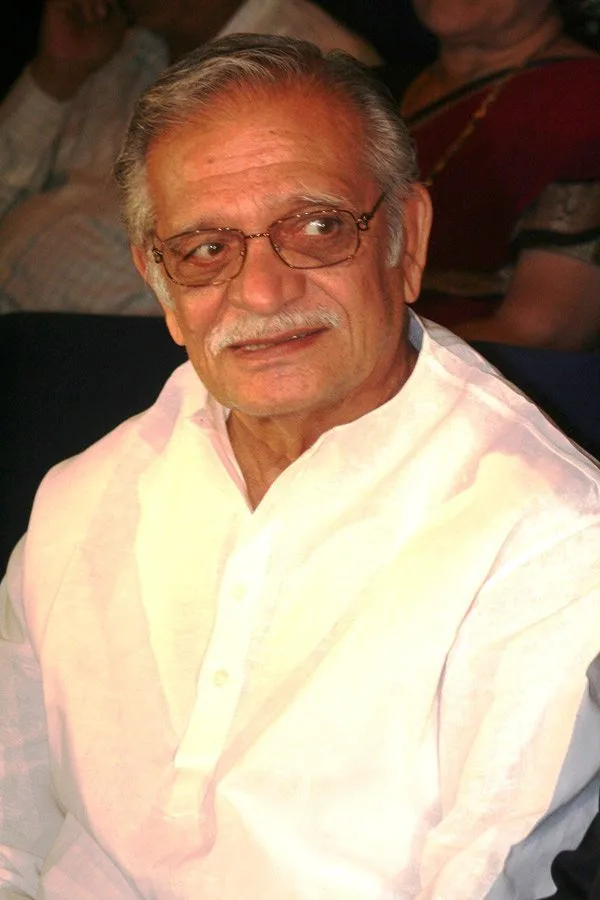
Also born on 27 December

Frequently asked
Who is Mirza Ghalib?
Mirza Ghalib was the most celebrated poet of the Urdu language, writing ghazals of wit, philosophical depth and longing in the last decades of the Mughal Empire. Court poet to Bahadur Shah Zafar, he witnessed the revolt of 1857, and his letters are classics of Urdu prose. He died in 1869.
When did Mirza Ghalib die?
Mirza Ghalib died on 15 February 1869 at the age of 71.
Where is Mirza Ghalib from?
Mirza Ghalib was born in Agra, Mughal Empire.
What is Mirza Ghalib known for?
Mirza Ghalib is best known for Urdu ghazals; Persian poetry; letters; witnessing the revolt of 1857.
References
- Ghalib — Wikipedia. Wikipedia. Retrieved 27 October 2026.
- Ghalib — Britannica. Encyclopaedia Britannica. Retrieved 27 October 2026.
- Ghalib — Hindi Wikipedia. Wikipedia (Hindi). Retrieved 27 October 2026.
- Ghalib (Q107000) — structured data. Wikidata. Retrieved 27 October 2026.
Includes material from the Wikipedia article “Ghalib”, licensed under CC BY-SA 4.0. That text is available under the same licence. Learn more
External links
Featured in
About this profile
- Researched by the TrackFame editorial team; reviewed by Sanjay Sokal under our editorial policy
- First published 27 October 2026
- Last updated
Cite this page
“Mirza Ghalib.” TrackFame, last updated 28 October 2026. https://trackfame.com/person/mirza-ghalib
Discussion 0
Sign in or create an account to join the discussion.
No comments yet — be the first.
More in Literature
 Literature
Amrita Pritam
Punjabi poet and novelist
1919 – 2005
 Literature
Kamala Das
Poet in English and short-story writer in Malayalam
1934 – 2009
 Film & TV
Satyajit Ray
Filmmaker and writer, director of the Apu Trilogy
1921 – 1992
 Literature
Mahasweta Devi
Bengali writer and activist for tribal communities
1926 – 2016
 Literature
Kabir
Fifteenth-century poet-saint of the Bhakti movement
 Literature
Sri Aurobindo
Philosopher, yogi, poet and early nationalist leader
1872 – 1950