From Vadnagar to 7 Lok Kalyan Marg: the political journey of Narendra Modi
From a small town in Gujarat to three terms as Prime Minister of India: a neutral, factual account of Narendra Modi’s political career.
By the TrackFame editorial team 3 min read
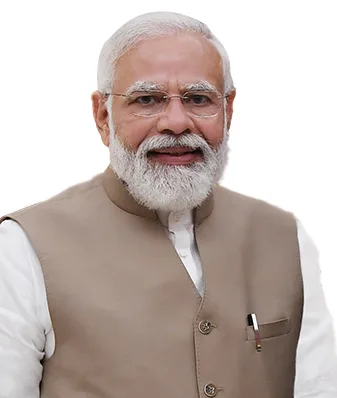
Narendra Modi is one of the most consequential and most debated leaders in India’s history. Born in a small Gujarat town, he became chief minister of his state and then Prime Minister of India three times. This is a factual account of that journey.
Early life in Vadnagar
Modi was born on 17 September 1950 in Vadnagar, in present-day Gujarat. He has said that as a boy he helped his father sell tea at the local railway station. He left home as a young man and travelled for some time before returning to Gujarat.
The RSS years
In the early 1970s he became a full-time worker (pracharak) of the Rashtriya Swayamsevak Sangh (RSS), the Hindu nationalist organisation. During the Emergency of 1975–77 he worked with groups opposed to the government of the day. He has said he later completed a master’s degree in political science through Gujarat University.
Joining the BJP
In 1985 the RSS assigned him to the Bharatiya Janata Party. He rose quickly as an organiser in Gujarat, helping plan events such as L. K. Advani’s Ram Rath Yatra in 1990, and was later appointed a national general secretary of the party.
Chief Minister of Gujarat, 2001–2014
In October 2001 the BJP chose Modi to replace Keshubhai Patel as chief minister of Gujarat. In February 2002, months after he took office, the state saw severe communal riots after the burning of a train carriage in Godhra. More than a thousand people were killed. Modi’s handling of the violence was heavily criticised by opponents; a Supreme Court-appointed investigation team later found no evidence to prosecute him, a conclusion the court upheld in 2022.
He went on to win state elections in 2002, 2007 and 2012, becoming Gujarat’s longest-serving chief minister. His supporters pointed to industrial growth, investment summits and infrastructure, often summed up as the “Gujarat model”. Critics questioned its record on social indicators.
First term as Prime Minister, 2014
As the BJP’s prime ministerial candidate in 2014, Modi led a highly organised campaign. The BJP won 282 of 543 Lok Sabha seats — the first single-party majority in three decades. He was sworn in on 26 May 2014, succeeding Manmohan Singh.
Key initiatives of the first term included the Swachh Bharat (Clean India) mission, the Jan Dhan bank accounts scheme, demonetisation of high-value notes in November 2016 and the Goods and Services Tax (GST) in July 2017.
Second term, 2019
The BJP increased its tally to 303 seats in 2019. The second term included the revocation of Jammu and Kashmir’s special status under Article 370 in August 2019, the Citizenship (Amendment) Act, the response to the Covid-19 pandemic, the Chandrayaan-3 Moon landing in 2023 and India’s G20 presidency.
Third term, 2024
In the 2024 general election the BJP won 240 seats, short of a majority on its own, and formed the government with allies in the National Democratic Alliance. Modi was sworn in for a third consecutive term on 9 June 2024, matching Jawaharlal Nehru’s record.
7 Lok Kalyan Marg
The prime minister’s official residence in New Delhi was known as 7 Race Course Road until 2016, when it was renamed 7 Lok Kalyan Marg (“Public Welfare Road”).
Style and communication
Modi is known for his direct communication with citizens — through rallies, social media and his monthly radio programme Mann Ki Baat, which began in 2014. He has one of the largest social-media followings of any world leader.
Supporters and critics
Supporters credit him with infrastructure building, welfare delivery, digital payments and a more assertive global role for India. Critics, including opposition leaders such as Rahul Gandhi, raise concerns about unemployment, inequality, the treatment of minorities and pressure on institutions and the press. These debates are central to Indian politics today.
The journey so far
From a railway platform in Vadnagar to the country’s highest elected office, Modi’s path is one of the most remarkable in Indian politics. He turned 76 in September 2026, and he remains the dominant figure in national life.
People in this article
Politics & Leadership
Narendra Modi
Prime Minister of India since 2014
Born 1950
 Politics & Leadership
Manmohan Singh
Thirteenth Prime Minister of India (2004–2014) and architect of the 1991 reforms
1932 – 2024
 Politics & Leadership
Rahul Gandhi
Leader of the Opposition in the Lok Sabha since 2024
Born 1970
More articles
All articlesTechnology
What Meta owns: Facebook, Instagram, WhatsApp, Threads and Quest explained
Meta Platforms owns some of the most-used apps on Earth. A simple guide to Facebook, Instagram, WhatsApp, Messenger, Threads, Quest headsets and Ray-Ban Meta glasses.
4 November 2026
Technology
From a Harvard dorm to Meta: the Facebook story
In 2004 a 19-year-old student launched a website from his Harvard dorm room. Two decades later it had become Meta, used by billions. The story of Facebook and Mark Zuckerberg.
4 November 2026
Technology
Zuckerberg’s superintelligence bet: inside Meta’s biggest AI push
Mark Zuckerberg has made “superintelligence” Meta’s top priority, hiring top researchers and spending heavily on data centres. What Meta Superintelligence Labs is and what it has released.
4 November 2026