Inside Reliance Industries: from textiles to telecom, retail and AI
Founded as a small trading firm by Dhirubhai Ambani, Reliance Industries is now one of India’s largest companies. How it grew, and what it does today.
By the TrackFame editorial team 3 min read

Reliance Industries is one of India’s most valuable companies, with businesses that touch the daily lives of hundreds of millions of people — from the fuel in cars to mobile phone networks and supermarkets. It began as a small trading business. This is the story of how it grew.
Dhirubhai’s beginnings
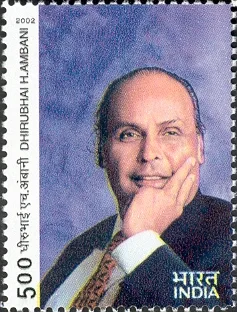
Dhirubhai Ambani was born in 1932 in Chorwad, Gujarat. After working in Aden (in present-day Yemen), he returned to India and in 1958 set up a trading business in Mumbai dealing in yarn and spices.
In 1966 he opened a textile mill at Naroda, near Ahmedabad. Its brand, Vimal, became famous across India.
Going public
Reliance listed on the stock market in 1977. Dhirubhai encouraged ordinary Indians to buy shares, and the company’s annual meetings were held in stadiums to accommodate shareholders. He is often credited with helping to build an equity culture in India.
Backward integration
Reliance followed a strategy known as backward integration — making the raw materials for its own products:
- polyester fibre and yarn;
- then petrochemicals;
- and eventually oil refining.
The Jamnagar refinery
In 1999–2000 Reliance began operating a large oil refinery at Jamnagar, Gujarat. After later expansion, Jamnagar became the world’s largest single-site refining complex. Refining and petrochemicals (the “oil-to-chemicals” business) remain a major source of the company’s income.
Two brothers
Dhirubhai Ambani died in July 2002. His sons, Mukesh Ambani and Anil Ambani, divided the business in 2005 after a public dispute settled with their mother’s help. Mukesh kept Reliance Industries, with the refining and petrochemicals business; Anil took telecom, power and financial services companies.
Reliance Retail
Reliance entered retail in 2006. Reliance Retail now runs grocery, electronics, fashion and pharmacy stores, including Reliance Smart, Reliance Digital and Trends, as well as online shopping through JioMart and Ajio. It is India’s largest retailer by revenue.
Jio
The company’s biggest bet was Reliance Jio, launched in 2016. Jio transformed the Indian telecom market with cheap data and became the country’s largest mobile operator, with more than 500 million subscribers by 2025. Jio Platforms filed for a stock-market listing in 2026.
Media and entertainment
Reliance owns a large media business. In 2024 it merged its media assets with The Walt Disney Company’s Indian operations, creating JioStar, which runs channels such as Star Plus and the streaming service JioHotstar.
New energy
Reliance has announced plans to build a large clean-energy manufacturing complex at Jamnagar, with factories for solar panels, batteries, electrolysers and fuel cells, and has set a goal of net-zero carbon emissions by 2035.
Artificial intelligence
At its 2025 annual general meeting, Reliance announced a new subsidiary, Reliance Intelligence, focused on artificial intelligence, along with partnerships with Google and Meta. Plans include AI data centres in Jamnagar and AI services delivered through Jio.
The next generation
Mukesh Ambani’s children have taken leadership roles: Akash leads Reliance Jio, Isha leads Reliance Retail and Anant is involved in the new-energy business. All three joined the company’s board in 2023.
Mukesh Ambani
Mukesh Ambani was born on 19 April 1957 in Aden. He studied chemical engineering in Mumbai and joined Reliance in 1981. He has been chairman since 2002 and is regularly ranked among the richest people in Asia.
Reliance in numbers
Reliance is one of India’s largest companies by revenue and market value, one of its biggest exporters and one of its largest taxpayers. It employs hundreds of thousands of people.
The verdict
From a yarn-trading desk in Mumbai to refineries, phone networks, shops and AI, Reliance’s story mirrors the story of modern Indian business. Its next chapters — the Jio listing, clean energy and AI — will help decide how the company looks for the next generation.
People in this article
More articles
All articlesTechnology
What Meta owns: Facebook, Instagram, WhatsApp, Threads and Quest explained
Meta Platforms owns some of the most-used apps on Earth. A simple guide to Facebook, Instagram, WhatsApp, Messenger, Threads, Quest headsets and Ray-Ban Meta glasses.
4 November 2026
Technology
From a Harvard dorm to Meta: the Facebook story
In 2004 a 19-year-old student launched a website from his Harvard dorm room. Two decades later it had become Meta, used by billions. The story of Facebook and Mark Zuckerberg.
4 November 2026
Technology
Zuckerberg’s superintelligence bet: inside Meta’s biggest AI push
Mark Zuckerberg has made “superintelligence” Meta’s top priority, hiring top researchers and spending heavily on data centres. What Meta Superintelligence Labs is and what it has released.
4 November 2026